Tag: Nihilism
-
The Wound of Time – 3: The Self as Timeline — Identity in the Prison of Becoming
We are taught to think of ourselves as stories. From childhood, the self is described as a process — something that develops, grows, matures, breaks, heals, changes. We are told to “become who we are,” to “work on ourselves,” to trace our identity through our memories, our traumas, our achievements, our transformations. In this view,…
Written by

-
The Wound of Time – 1: The Appearance of Time and the Fear of Disappearing
There is a fear that runs deeper than all others — one that haunts every joy, waits at the edge of every accomplishment, and whispers beneath even our happiest moments. It is the fear that what is will not last. That we, and all we love, will vanish. That time will take everything. This fear…
Written by

-
Male & Female 1: The Polarity of Being – Male and Female as a Fundamental Structure
Polarity is woven into the fabric of reality. From the forces governing the cosmos to the tiniest particles in physics, the universe operates through the tension and balance between opposites. One of the most fundamental and enduring polarities is that of male and female. This polarity isn’t just a social or cultural construct—it reflects a…
Written by

-
Know Thyself – 7: The Culture of Self-Making and the Tyranny of Becoming
You can be whatever you want to be.” But what if that is the root of our confusion? Modern culture does not ask us to know ourselves; it demands that we make ourselves.This shift, often hailed as liberation, has become a new tyranny. We are no longer born with a destiny to recognize, but with…
Written by
-
Know Thyself – Introduction
The Crisis of Identity and the Return to Being We live in an age where identity is everything, and nothing. It is affirmed, debated, deconstructed, weaponized, and endlessly remade. To belong or to be excluded, to find one’s “true self” or to reject the very idea of a fixed self; these now lie at the…
Written by
-
The Unfolding of Truth – 9: Emanuele Severino – The Inevitable Resolution of the Contradiction
The Final Contradiction The journey of philosophy, from Parmenides to postmodernity, is marked by one recurring drama: the tension between Being and becoming. Parmenides declared: Being is; non-being is not. And yet, all of history, Platonic dualism, Christian creation, Buddhist emptiness, modern subjectivity, has wrestled with the appearance of change: These questions have driven metaphysics,…
Written by

-
The Unfolding of Truth – 8: Modernity – From Substance to Subject and the Collapse of Metaphysics
The Turning Point: From the World to the Self With the collapse of the medieval synthesis, the philosophical gaze shifted dramatically. No longer anchored in substance metaphysics or a transcendent order, modernity turned inward, to the thinking subject as the new foundation. This was not merely a shift in emphasis. It marked the beginning of…
Written by
-
The Unfolding of Truth – 7: Scholasticism and the Domestication of Metaphysics – The Final Attempt Before the Fall
The Afterglow of Revelation and the Return of Aristotle As the Middle Ages matured, a remarkable convergence took place: the truths of revelation were increasingly systematized through the lens of Greek metaphysics, particularly that of Aristotle. The fusion promised much: clarity, coherence, and the ability to defend faith through reason. Yet behind this synthesis lay…
Written by
-
The Unfolding of Truth Through the History of Thought – Introduction
Throughout the history of human thought, there has been a persistent intuition, often obscured, often contradicted, yet never entirely extinguished, that reality is not what it seems. From the first metaphysical inquiries in ancient Greece to the contemplative insights of Eastern sages, from the mystical speculation of late antiquity to the rational rigor of modern…
Written by
-
Christianity and the Structure of Being– Conclusion: Christianity Was Never Meant to End in Dualism
The Return to What Has Always Been True Throughout this series, we’ve traced a path—one not of rejection, but of return. Not a return to doctrine as it has been taught, nor to metaphysics as it has been inherited, but to the truth Christianity has always carried within itself: that what-is cannot not be. That…
Written by
-
Christianity and the Structure of Being– 3: The Persistence of the Platonic Framework
From Augustine to Modernity: How Christianity Carried the Logic of Annihilation By the time Christianity emerged as the dominant religious force of the Roman Empire, the seeds of a deeper metaphysical tension had already been sown. The Christian proclamation of the eternal had fused with the Platonic suspicion of time, matter, and change. The result…
Written by
-
Christianity and the Structure of Being – 2: The Infiltration of Platonism
How Greek Metaphysics Entered Christian Thought In its earliest centuries, Christianity encountered a world saturated with Greek philosophy. Among the many schools of thought that shaped late antiquity, none was more influential—or more seductive—than Platonism. Plato offered a majestic metaphysical vision: a realm of eternal, unchanging Forms—the true Being of which all sensible things were…
Written by

-
Christianity and the Structure of Being– Introduction to the Series
From Dualism to Destiny For centuries, Christianity has offered the Western world its deepest intuitions about the eternal: that life does not end in death, that the person is sacred, that love is stronger than the grave, and that a kingdom without end is not only possible—but promised. And yet, these luminous insights have long…
Written by

-
The Final Non-Duality 2 – Buddhism: Emptiness and the Movement Beyond Suffering
The Eternal Structure Misread as Impermanence Among the spiritual paths of the world, Buddhism stands out for its analytical clarity and radical focus on the problem of suffering. Its foundation — the Four Noble Truths — begins not with metaphysical speculation but with existential urgency: dukkha, the suffering that characterizes life, and the promise of…
Written by

-
The Last Dualism 3 – Awakening Without Becoming
The Contradiction of Enlightenment in the Light of Eternal Being The modern non-dual discourse is saturated with the language of awakening. One is said to awaken from illusion, from ego, from time, from the false self. This awakening is often described as a shift, a transformation, a sudden recognition, or the end of seeking. For…
Written by

-
The Last Dualism 2 – The Myth of the Body’s Illusion
Plato’s Legacy and the Persistence of the Great Dualism In the midst of today’s non-dual revival, a strange contradiction persists. While the language of unity, presence, and wholeness is widespread, the body—this visible, touchable, vulnerable being—is often spoken of as an illusion, a veil, a mistake. In countless spiritual teachings, the body is subtly or…
Written by

-
The Last Dualism 1 – What Is Truly Non-Dual?
Beyond the Confusion of Experience, Metaphor, and Ontology In recent decades, few terms have gained as much traction in spiritual and philosophical circles as “non-duality.” From Eastern teachings like Advaita Vedanta and Dzogchen, to Western spiritual movements, therapy sessions, and even casual Instagram posts, the term has become a kind of shorthand for ultimate truth,…
Written by

-
The Last Dualism – Intro: How Non-Duality Preserves the Root of Nihilism
Introduction A growing chorus in contemporary spirituality and philosophy sings of non-duality, interconnection, and wholeness. Eastern traditions, modern mystics, and therapeutic modalities echo the same refrain: separation is an illusion, all things are ultimately one, and awakening lies in transcending dualistic thought. Terms like oneness, pure consciousness, and non-separation circulate freely, suggesting a new paradigm…
Written by

-
The Structure of Madness
Madness is the belief in what is not. The common image of the madman who is Napoleon is crude, but correct: he affirms nothingness. Pursue this logic, and all are mad. We are mad in our faith that will originates action, that “if” governs “then.” This is humanity’s primordial error. The Faith in Contingency This…
Written by

-
The Acrobat and the Void: When Therapy Cannot Cure Nihilism
We are like acrobats who have let go of the trapeze of tradition, of metaphysics, of a world imbued with inherent meaning. For a moment, the flight was exhilarating; the freedom of self-creation, the triumph of the individual. But now we are suspended in the void, arms outstretched, waiting for a trapeze that never arrives.…
Written by

-
The Unbearable Truth: What Our Demographic Collapse Really Means
We are witnessing not a problem to be solved, but a fate to be understood. The converging crises of demographic implosion, unsustainable debt, and societal aging are typically diagnosed as separate policy failures: a lack of childcare incentives, flawed economic models, or medical advances that have outstripped our wisdom. But to see them this way…
Written by
-
Beyond Materialism & Idealism 2: Why Idealism Also Fails – The Limits of Mind as Reality
Materialism collapses under the weight of its own contradiction: it insists that things come into and out of existence, yet it offers no justification for this assumption. Idealism, often considered its intellectual counterpoint, seeks to overcome materialism’s limitations by placing mind or consciousness at the center of reality. However, despite its valuable critiques, idealism ultimately…
Written by

-
Beyond Materialism & Idealism 1: The Faith of Materialism – The Unquestioned Assumption
Materialism presents itself as the most rational, scientific, and evidence-based perspective of reality. It claims to reject unfounded beliefs in favor of empirical knowledge. Yet beneath this confident exterior lies an unquestioned assumption: the belief that things come into being and pass away. This belief, which serves as the foundation of materialist thought, is neither…
Written by

-
Beyond Materialism and Idealism: The Search for the Real
For centuries, materialism has shaped the modern worldview. It presents itself as a sober, evidence-based approach to reality—asserting that all things, including thought and consciousness, emerge from material processes and ultimately vanish into nothingness. Yet beneath its claims of objectivity lies an unexamined assumption: that things come into being and cease to be. This belief…
Written by
-
Identity 2: The Fragmentation of the Individual – Forces Dividing the Self in Contemporary Society
In the previous article, we uncovered identity as necessary (unchangeable and eternally true—it simply is) and eternal, hidden by misconceptions tied to time, nihilism, and cultural emphasis on becoming. Now, we turn to the fragmentation of the individual—how and why our true identity is obscured and divided in today’s world. Modern society, with its rapid…
Written by

-
Identity 1: What Is Identity? Unveiling the Eternal Self
In our fast-paced world, identity often seems like a fluid concept—something we shape, redefine, or even reinvent over time. We hear phrases like “finding oneself,” “changing who I am,” or “reinventing my identity,” suggesting that identity is flexible, subject to personal choice and external circumstances. Yet, beneath these assumptions lies a deeper truth: identity is…
Written by

-
Mind & Heart – 1: The Existential Crisis and the Collapse of Meaning
The Necessity of Nihilism’s Appearance The contemporary crisis in mental health is not merely a matter of personal struggles or biochemical imbalances. The rising prevalence of depression, anxiety, and despair coincides with the dissolution of once-dominant narratives of meaning. This is no accident but part of a necessary unfolding. The decline of religious, philosophical, and…
Written by

-
The Illusion of Control and the Groundless World
We often think of the current world crisis as something political or economic, something triggered by wars, shifting alliances, the collapse of trust in leadership. And while all this is visible on the surface, something deeper and more enduring lies beneath. What we’re witnessing is not merely a Western crisis, nor a contest between old…
Written by
-
The Naked Emperor and the Crisis of the West
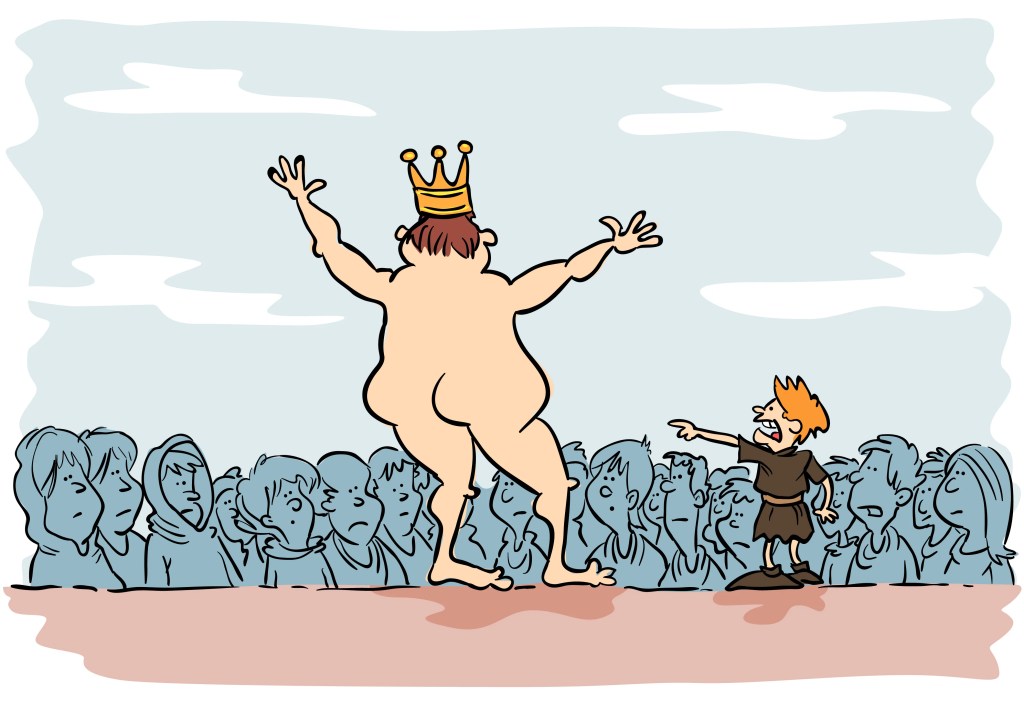
When Power Loses Its Illusion, Truth Begins to Appear A World in Turmoil We are living through a period of increasing disorientation. The symptoms are everywhere: political instability, cultural fragmentation, ecological degradation, and the collapse of trust in institutions. Each crisis feels like a rupture, and yet taken together, they begin to form a single,…
Written by
-
The Unfolding of Identity – Article 1: The Fragmentation of Identity and the Necessity of Contradiction
The modern world has seen an increasing crisis of identity. From the dissolution of traditional roles to the proliferation of self-definitions, identity has become a battleground of fluidity, self-construction, and deconstruction. Postmodernism, with its deep skepticism of fixed categories, has only accelerated this dissolution. Yet, rather than viewing this as a mere loss or an…
Written by

 It Is What It Is