Tag: Platonism
-
The Unfolding of Truth – 4: Christian Revelation – Creation, Logos, and the Problem of Time
With the advent of Christianity, a new voice enters the unfolding of thought, one that speaks not only of the eternal, but of a personal God who creates out of love, enters into history, and redeems. The metaphysical speculation of the Greeks meets the narrative structure of Scripture. Logos becomes flesh. Eternity touches time. At…
Written by

-
Christianity and the Structure of Being–A Metaphysical Map
From Plato to the Eternal Structure of Being 🔹 1. Plato (4th c. BCE) Core Move: Eternal Forms vs. Temporal World 🡺 Impact: Introduces the first metaphysical dualism→ Sets up the world of change as ontologically inferior→ Seeds the logic of annihilation (what becomes can also vanish) 🔹 2. Early Christianity (1st–4th c. CE) Core…
Written by

-
Christianity and the Structure of Being– 5: Toward Fulfillment — Christianity and the End of Dualism
The Return to What Has Always Been True Christianity stands today at a threshold — not of decline, but of fulfillment. After centuries of tension between its deepest intuitions and its inherited metaphysics, the time has come to see what has been gesturing from the beginning: that the truths it proclaims are not mere hopes…
Written by

-
Christianity and the Structure of Being– 3: The Persistence of the Platonic Framework
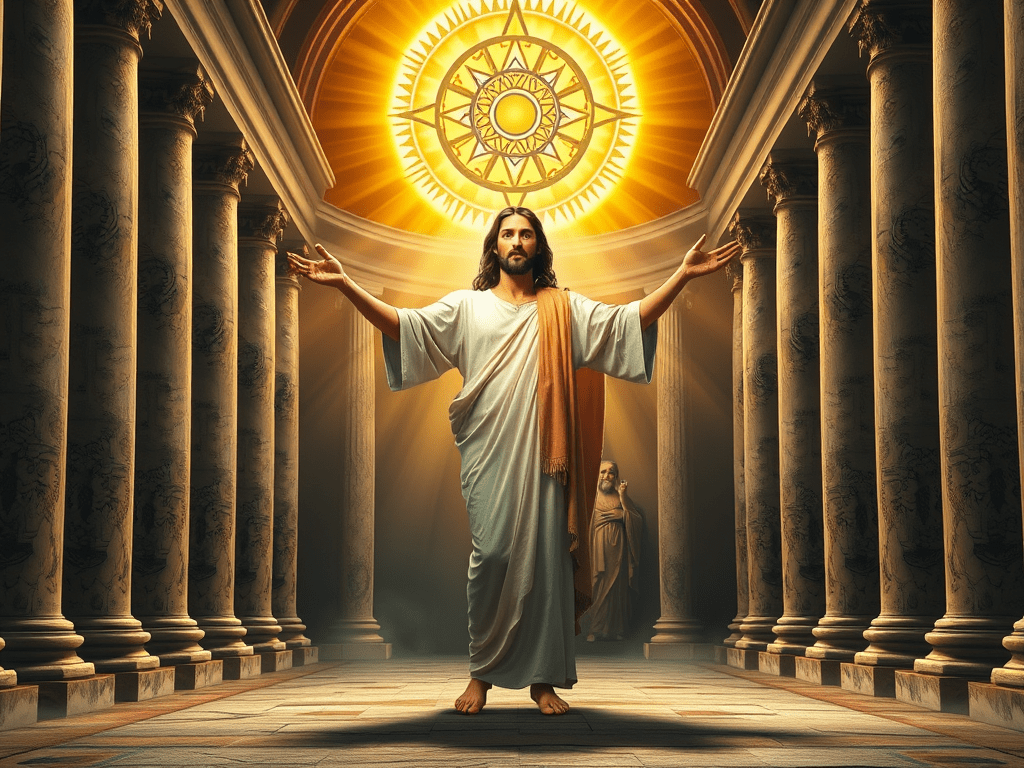
From Augustine to Modernity: How Christianity Carried the Logic of Annihilation By the time Christianity emerged as the dominant religious force of the Roman Empire, the seeds of a deeper metaphysical tension had already been sown. The Christian proclamation of the eternal had fused with the Platonic suspicion of time, matter, and change. The result…
Written by
-
Christianity and the Structure of Being – 2: The Infiltration of Platonism
How Greek Metaphysics Entered Christian Thought In its earliest centuries, Christianity encountered a world saturated with Greek philosophy. Among the many schools of thought that shaped late antiquity, none was more influential—or more seductive—than Platonism. Plato offered a majestic metaphysical vision: a realm of eternal, unchanging Forms—the true Being of which all sensible things were…
Written by

-
Christianity and the Structure of Being– Introduction to the Series
From Dualism to Destiny For centuries, Christianity has offered the Western world its deepest intuitions about the eternal: that life does not end in death, that the person is sacred, that love is stronger than the grave, and that a kingdom without end is not only possible—but promised. And yet, these luminous insights have long…
Written by

 It Is What It Is