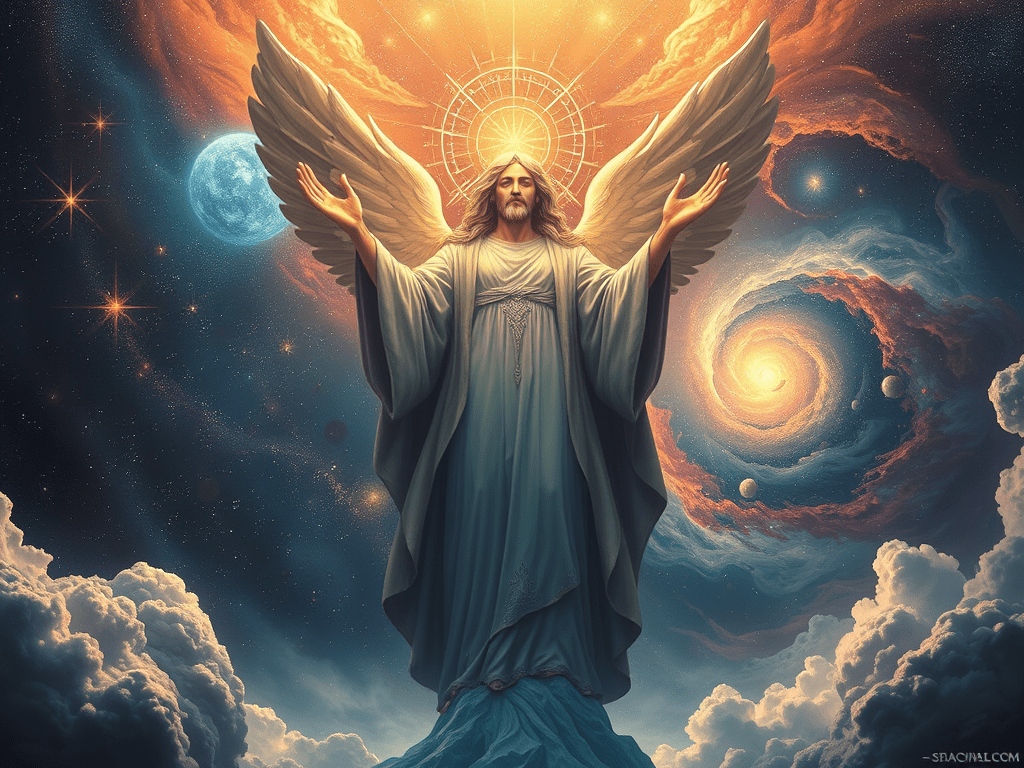
Religion and the Eternal: Creation, God, and Necessity
Religion has long been the primary means through which humanity seeks to understand ultimate reality. It provides narratives that shape meaning, morality, and our place in the cosmos. Yet, within religious thought, there is a fundamental tension: the assumption that God or the divine is eternal and necessary, while the world and its beings are contingent, created from nothing, and subject to change.
This contradiction—between the eternal and the contingent—has shaped theological traditions for millennia. But if becoming is an illusion and all that is must necessarily be, then how do we reconcile religious thought with the eternal structure of reality?
Creation and the Assumption of Contingency
The dominant theological tradition in the West affirms that God created the world ex nihilo, from nothing. This doctrine attempts to preserve divine omnipotence, asserting that God is the sole source of existence. However, this assumption raises a critical problem: if nothingness is impossible, how can creation from nothing be real?
If being is eternal, then no being ever truly emerges from non-being. This means that creation cannot be the production of something that previously did not exist. Rather, creation must be understood in a way that does not contradict necessity.
Some theological traditions have hinted at alternative models:
- Emanationism (seen in Neoplatonism and some mystical traditions) suggests that the world is an unfolding of divine reality rather than a distinct creation from nothing.
- Panentheism proposes that all beings exist within the divine rather than as separate, contingent entities.
- Classical Theism often describes God as the “ground of being,” but does not always resolve how this relates to eternity.
Each of these models struggles with language and inherited assumptions. But they reveal an underlying intuition: the separation between God and creation is not as absolute as it might seem.
The Necessity of God and the Necessity of Being
If all that exists is necessary, then God does not bring beings into existence from nothing. Instead, divine reality can be understood as the appearing of truth—the eternal appearing of what must necessarily be.
This perspective does not diminish the divine but rather removes the contradiction in traditional theology. It aligns with the view that God is not a being within becoming, nor an external agent who acts upon being, but rather the eternal necessity itself—the foundation of all that is.
Many religious traditions have already moved in this direction, even if implicitly. The idea that God is beyond time, that the divine reality is unchanging, and that ultimate truth is eternal all point toward this recognition. The difficulty has always been reconciling this with the notion of a changing world, but once we recognize that becoming is illusion, this contradiction dissolves.
Reinterpreting Key Religious Themes in Light of Eternity
Understanding the necessity of being does not eliminate religious meaning but deepens it.
- Creation is not a moment in time but the eternal appearing of reality.
- Divine will is not a decision in time but the necessity of truth itself.
- Providence is not intervention but the unavoidable unfolding of eternal necessity.
- Salvation is not escape from a transient world but the recognition of the eternal.
These insights align with mystical and philosophical traditions that have long seen the ultimate goal of religion as recognizing the unchanging truth beyond illusion. The idea that “the kingdom of God is within you” and that enlightenment consists of awakening to reality both point toward the same fundamental truth: being is, and it cannot not be.
Introducing the Fear of Necessity
Yet, if all that is must necessarily be, a question arises: does this mean that suffering, too, is eternal?
This concern has led many to resist the full recognition of necessity. The fear that pain, loss, and evil are unchangeable has driven both theological and philosophical attempts to preserve becoming—to insist that change, redemption, or escape must be possible.
But does necessity truly entail an eternal suffering? Or does the recognition of being dissolve suffering in a way that nihilism never could?
In the next article, The Fear of Necessity: Is Suffering Eternal?, we will confront this question directly and examine why necessity does not lead to despair, but rather to the deepest recognition of joy.
 It Is What It Is
Leave a comment