Introduction: The Question That Remains
The series From Contradiction to Joy explored how the recognition of Being dissolves the illusion of suffering and reveals the necessity of joy and glory. Yet, one question still lingers: Why contradiction to begin with? Why does suffering, evil, war, and injustice appear in the unfolding of reality? This question is as old as human thought itself, yet from the perspective of the Structure of Being, it requires an entirely different approach.
The Mistaken Assumption of Contingency
The common way of framing the problem of suffering assumes that reality could have been different, that a world without suffering is imaginable, perhaps even preferable. But necessity means that nothing could be otherwise. Every moment of existence, including suffering and conflict, is an eternal necessity, not an arbitrary or contingent occurrence. If we think suffering shouldn’t exist, we are still caught in the illusion of becoming—the belief that things arise and perish, that they could be different than they are.
The Role of Contradiction in the Unfolding of Truth
Severino describes contraddizione C, the contradiction inherent in nihilism. The mistaken belief in becoming leads to the illusion that things pass into and out of nothingness. It is within this framework of thought that suffering is interpreted as loss, destruction, or injustice. But this very contradiction is necessary because it allows for the appearing of truth. The world as we perceive it, with all its struggles, is not a meaningless accident but an essential step in the movement toward the recognition of Being.
Suffering as an Appearance, Not an Ontological Loss
If all that exists is eternal, then suffering is not the destruction of something real. Rather, it is a necessary mode of appearing within the unfolding order of Being. A person who suffers does not cease to be; their suffering does not vanish into nothingness. It is an eternal moment of their necessity. From the limited viewpoint of conditioned thought, suffering appears as tragic. But from the perspective of Being, it is simply one among infinite necessary moments in the totality of reality.
The Transformation of Meaning
The idea that suffering is meaningless or unjust is itself a product of the illusion of becoming. The more thought moves toward the recognition of Being, the more suffering is seen not as something to be eliminated, but as part of the necessary appearing of truth. The tragic interpretation of suffering dissolves not because suffering disappears, but because its meaning changes. It is no longer seen as an imperfection or a loss, but as an inevitable step in the unfolding revelation of reality.
Beyond Justification: The Eternal Necessity of Every Moment
People often ask, But why must suffering exist at all? This question assumes suffering could have been avoided, as if reality were a contingent structure where some things happen by chance. But in necessity, nothing is avoidable; every moment is what it must be. Rather than looking for justification or ultimate blame, the deeper question is: What does suffering reveal? It reveals the limits of conditioned thought, the illusion of becoming, and ultimately the necessity of truth’s appearing.
Conclusion: The Inevitable Resolution of Contradiction
The question of suffering and evil is not a problem to be solved but a necessary stage in thought’s unfolding. Instead of asking, Why does contradiction exist? we come to see that contradiction itself is a necessary part of the appearing of Being. The tragedy dissolves when it is understood not as an error but as an essential structure within the eternal order.
This does not mean we ignore suffering or dismiss it – it means seeing it as part of the inevitable movement toward truth. What appears as darkness is not the absence of light but the necessary unfolding of light’s revelation.
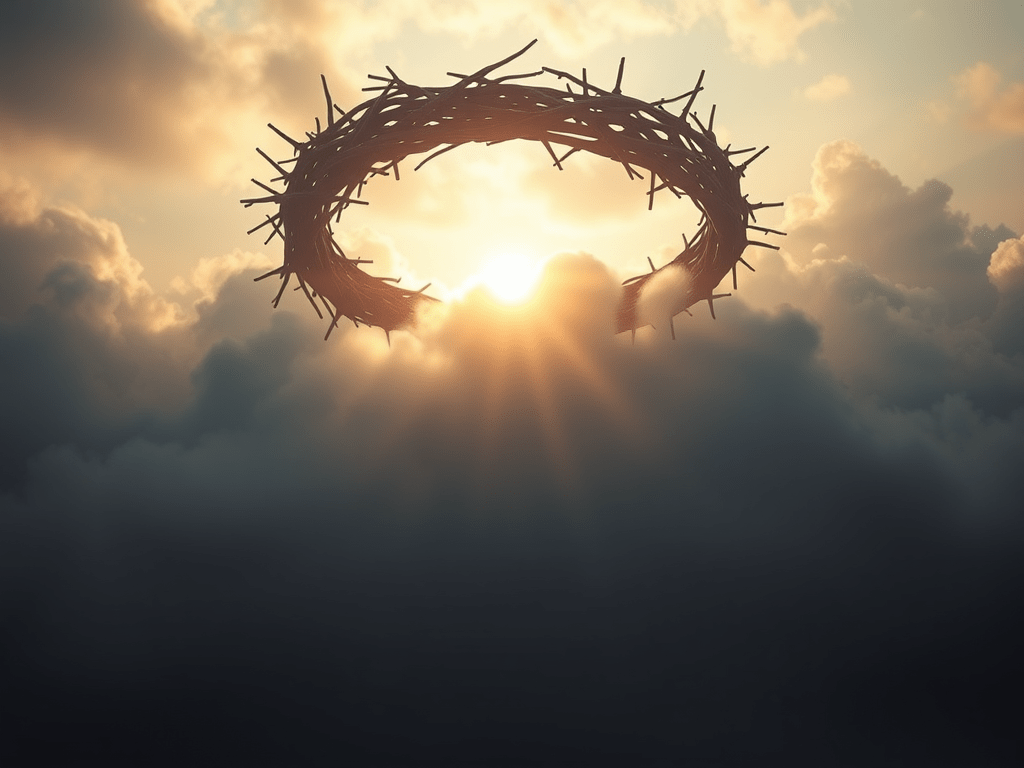
Christianity expresses a profound intuition of this truth in the words, “Was it not necessary for the Christ to suffer these things and to enter His glory?” (Luke 24:26). The necessity of suffering is not a burden imposed from outside but an inherent aspect of the appearing of glory itself. The recognition of this truth is not an intellectual exercise but the foundation of joy – the certainty that nothing is lost, nothing is meaningless, and everything, even suffering, is part of the immutable necessity of Being.
 It Is What It Is
Leave a comment