Tag: Becoming
-
Beyond Left and Right – Article 10: The Eternal City – Towards a Civilization Aligned with the Structure of Being
Western civilization, having undergone profound crises of meaning, has long been caught in the oscillation between competing ideologies—none of which have been able to provide a stable foundation. The failure of both progressive deconstructionism and reactionary restorationism points to a deeper issue: the absence of a necessary and indestructible foundation upon which civilization can rest.…
Written by

-
🗂️ Updated Glossary & Key Concepts
Understanding the Eternal Structure of Being in Light of Severino’s Thought This glossary introduces essential terms and distinctions for readers encountering the philosophy of Emanuele Severino and the paradigm of the eternal structure of Being. Each term is presented in accessible language, followed by clarifying analogies or diagrams where helpful. 1. Contraddizione C Definition: The…
Written by
-
Post 60 – Sexuality, Gender, Marriage, and Family as Expressions of the Structure of Being
Building upon the understanding of human relationships as necessary expressions of the eternal structure of being, we now turn to specific aspects of this reality: sexuality, gender, marriage, and family. In contemporary discourse, these elements are often viewed as fluid constructs, shaped by personal choice and cultural influence. A key aspect of this perspective is…
Written by

-
Post 59 – The Eternal Necessity of Human Relationships in the Structure of Being
Introduction: The Question of Human Relationships In the modern world, human relationships are often viewed as contingent, shaped by historical, cultural, and psychological factors. Friendships, romantic bonds, family ties, and even broader societal structures are frequently treated as mutable, open to individual or collective revision. However, from the perspective of the Structure of Being, relationships…
Written by

-
Post 58 – Beyond Method: Science and the Structure of Being
The preceding exploration of philosophy, mysticism, theology, and near-death experiences (NDEs) examined how different paths attempt to unveil truth. Each of these approaches, despite their differences, ultimately gestures toward the same reality: the immediate, self-evident appearing of truth. What remained unaddressed, however, is the role of science in this interplay. If science, too, seeks to…
Written by

-
Post 54 – The Paradox of Action: If Nothing Can Be Otherwise, Why Do We Strive?
The Question If we are a will, but our will is also our being and there is no becoming; if life unfolds as it is and not as a contingency subject to alternative options, then what is the use of trying to steer it one way or the other? If necessity determines all, what role…
Written by

-
Post 53 – Suffering, Guilt, and Resentment from the Perspective of the Structure of Being
Human existence is marked by suffering, guilt, resentment, and the struggle with wrongdoing. These arise from our experiences of loss, injustice, and the relentless passage of time. How can philosophy address such profound challenges? The Structure of Being offers a radical perspective—one that dissolves the assumptions underpinning these existential burdens by revealing the eternal nature…
Written by

-
Near Death Experiences 8: Conclusion: NDEs as an Expression of the Unfolding of Truth
Near-Death Experiences (NDEs) have long been the subject of debate—are they proof of an afterlife, hallucinations of a dying brain, or something else entirely? Throughout this series, we have moved beyond these conventional interpretations, recognizing that both the materialist and religious readings of NDEs remain confined within the assumption of becoming. Rather than proving or…
Written by

-
Near Death Experiences 5: The Perception of a “Return” and the Misconception of Leaving and Coming Back
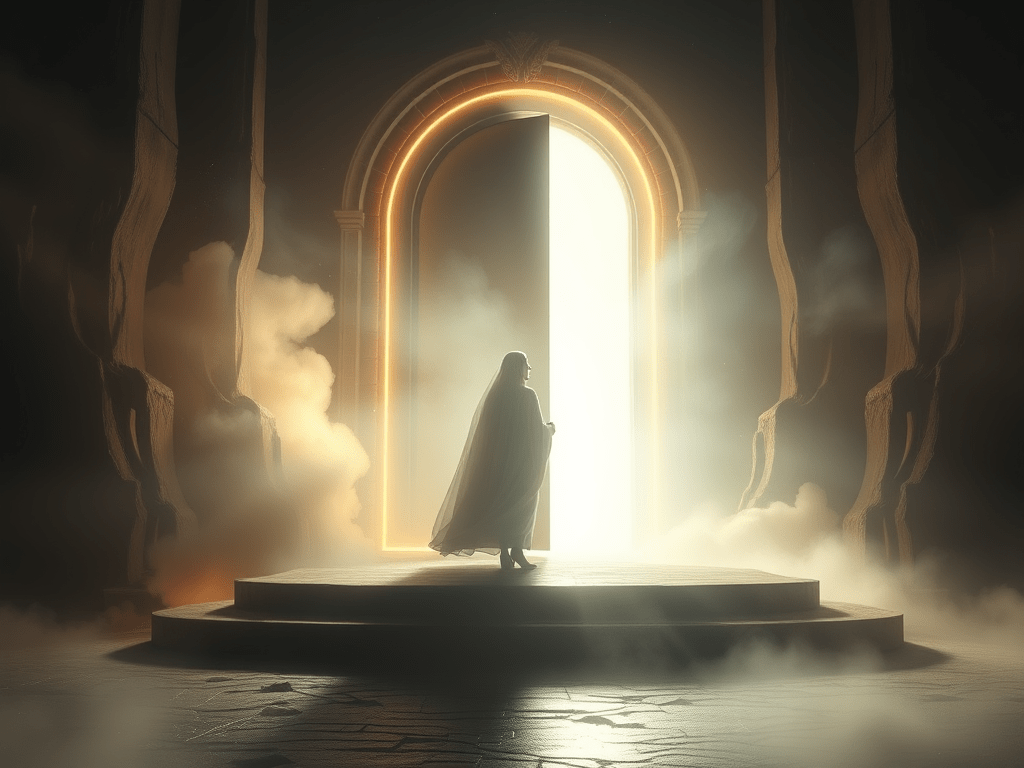
A central theme in Near-Death Experience (NDE) accounts is the idea of returning. Many who undergo these experiences describe reaching a threshold—often depicted as a boundary of light, a door, or a vast expanse—before being told, or realizing, that they must go back. Some recount a choice, others an abrupt re-entry into their physical body.…
Written by
-
Post 43 – The Structure of Being: Its Unfolding from Parmenides to Severino
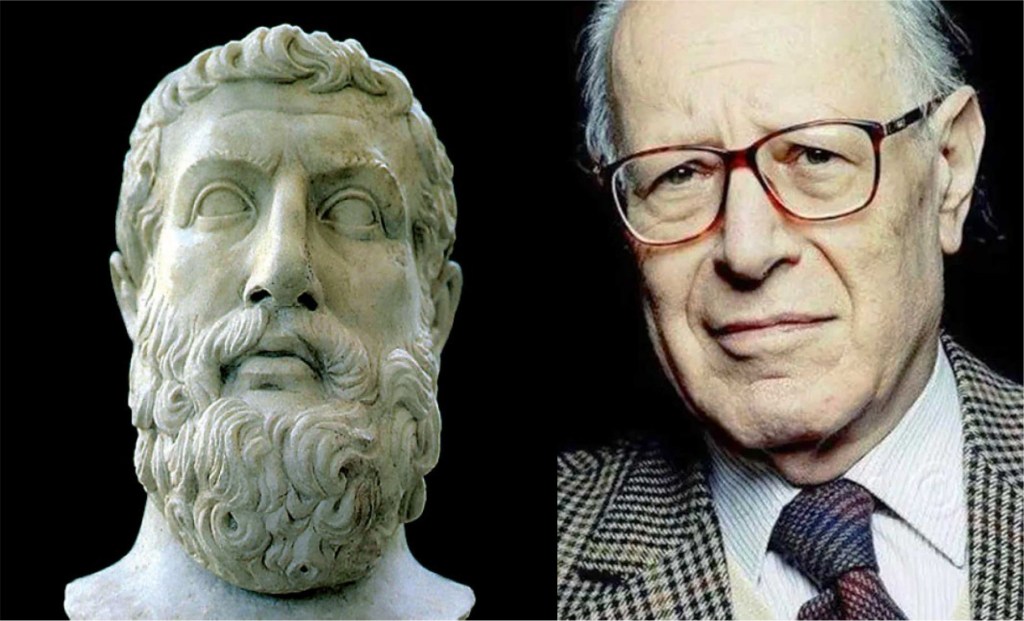
The history of Western thought is the history of the appearing of truth—an appearing that first manifested with Parmenides but remained incomplete, leading to millennia of nihilism before culminating in the necessity of its fuller recognition with Emanuele Severino. The unfolding of the structure of Being is not merely an intellectual progression but the necessary…
Written by
-
Understanding the Structure of Being – 7
The Challenge of Language: How Words Reinforce Illusion Language is the medium through which we express, conceptualize, and communicate reality. Yet, it is also one of the greatest barriers to understanding the eternal structure of being. The very words we use are steeped in the assumption of becoming—of things arising, changing, and perishing. As it…
Written by

-
Understanding the Structure of Being – 1
The Inescapable Belief in Becoming One of the most immediate and profound difficulties in understanding the Structure of Being is the deeply ingrained belief that things come into existence and pass away. This belief—what Emanuele Severino calls “becoming”—is not merely a theoretical assumption but a fundamental lens through which we perceive reality. We do not…
Written by

-
Understanding the Structure of Being: An Introduction
Many who first encounter the Structure of Being, as revealed in Emanuele Severino’s thought, find themselves facing profound difficulties—not because the truth is obscure, but because habitual ways of thinking resist it. The idea that being is eternal, that nothing truly comes into or goes out of existence, contradicts the deeply ingrained belief in becoming—the…
Written by

-
Near Death Experiences 2: The Illusion of Linear Time
One of the most pervasive features of Near-Death Experiences (NDEs) is their apparent structure as a journey—a passage from life to death, from darkness to light, from earthly existence to an encounter with something beyond. Many accounts describe moving through tunnels, crossing thresholds, or entering vast, radiant spaces. Others speak of being sent back, of…
Written by

-
Post 29 – The Great Myth of Becoming: The Central Illusion of Western Thought
While philosophy emerged from the desire to move beyond myth and provide more rational, logical explanations of reality, it is almost ironic that it inadvertently gave birth to what may be the greatest myth ever conceived: the belief in becoming—the notion that things come into existence and then fade away. Since the dawn of philosophy…
Written by

-
Post 14 – Understanding the Impossibility of Becoming
The Impossibility of becoming also deserves to be clarified. Though mentioned in many posts, the question of becoming has not been singularly addressed. This is what I was referring to in the introduction, when speaking of some things difficulty to understand, not because of their complexity, but because of the way we have been taught…
Written by


