Tag: Becoming
-
Truth Will Set You Free… But First It May Unsettle Everything
We often speak of truth as though it were necessarily comforting. “Truth will set you free” sounds like a promise. Behind it is an image of liberation in which something false is removed, clarity arrives, and we are finally able to live without the burdens that kept us confined. There is something deeply true in…
Written by

-
Origins, Causation, and Eternity: What Does a Beginning Really Mean?
We tend to speak of reality as though everything must have a beginning. The universe began. Life began. Each of us began. And behind these statements there seems to be an obvious picture: before something existed, there was nothing, and then, somehow, that something appeared. Three very different accounts of reality are often brought into…
Written by

-
The Difficult Truth
On the Chasm Between Severino’s Eternity and the Human Condition Introduction: The Philosopher’s Paradox This is a peculiar phenomenon observed in the halls of academia: a philosopher can achieve a masterful command of the necessary truth of eternal being, a truth whose logical framework Severino demonstrated, and yet display anxiety over a career milestone, vehement…
Written by

-
Beyond Guilt 1 – The Collapse of Moral Control: Why Guilt Cannot Ground Ethics
The Crumbling Foundation For centuries, human behavior has been regulated by the machinery of guilt.Societies, religions, and moral systems have sought to preserve order by appealing to a fundamental fear: the fear of having done wrong, of having failed, of being condemned. Guilt was the leash that tethered the will to control.It was assumed that…
Written by

-
Nature of Guilt 5: The Clarity That Was Always Waiting
Guilt Has Done Its Work If you’ve carried guilt, quietly, for years, you may have believed that you were being honest. That punishing yourself was part of being good, part of being human, part of taking responsibility. You may have thought that guilt would redeem you, or that it was your only way to mourn…
Written by

-
Nature of Guilt 4: Life Review in Near Death Experiences
When the Whole Life Returns For some, the unraveling of guilt doesn’t come through philosophy. It doesn’t come through slow reflection or spiritual practice. It comes suddenly, in a moment when the body stops and the boundary between life and death seems to fall away. Across cultures, across backgrounds, across beliefs, thousands of people have…
Written by

-
Nature of Guilt 3: The Eternal Structure and the End of Condemnation
The Past That Cannot Change Guilt survives on the idea that the past was yours to shape, and that you shaped it wrongly.But what if the past cannot be changed not only because it is gone, but because it was never up for negotiation in the first place? What if what happened had to appear,…
Written by

-
Nature of Guilt 2: The Illusion of Becoming and the Myth of the Will
Guilt and Its Unspoken Premise Every experience of guilt, whether mild remorse or crushing regret, rests on a single, powerful assumption: That I could have acted otherwise. This belief is rarely questioned. It is embedded not just in religion or psychology, but in the entire way modern humanity conceives of freedom, responsibility, and the self.…
Written by

-
Nature of Guilt 1: The Quiet Tyranny of Guilt
The Familiar Ache There is a kind of suffering that does not scream. It doesn’t arrive like trauma or tragedy. It doesn’t demand attention. Instead, it lingers, quiet, persistent, folded into the daily rhythm of thought. A single memory. A regret. A word left unsaid. A moment you replay a thousand times, whispering, “If only…
Written by

-
Generational Rupture 3: The Burden of Blame — Trauma, Victimhood, and the Generational Divide
In the disoriented landscape of our time, perhaps no fracture is more emotionally charged than the one between generations. Behind the clamor of public debate, beneath the seemingly endless cycles of outrage and misunderstanding, there lies a profound shift in the way the self is experienced and the past is remembered. The child looks to…
Written by

-
Generational Rupture 2: The Myth of Progress and the Worship of the New
Modernity is often celebrated as the triumph of progress. From scientific discovery to technological innovation, from medicine to human rights, the march of time is assumed to bring improvement. History is seen not as a cycle or a revelation, but as a line leading ever forward. In this vision, the future is the land of…
Written by

-
Generational Rupture 1: The Age of Forgetting: Why the Past Became the Enemy
There is a wound in the heart of the modern world, and it cuts across time itself. It is the fracture between generations: not simply a difference in taste or temperament, but a growing and often painful divide between the old and the young, the past and the present. The once-revered figures of age, memory,…
Written by

-
Psychedelics and the Structure of Being – 3: From Experience to Illusion: The Limits of Altered States
The psychedelic experience has returned to the center of contemporary spiritual and therapeutic discourse. In this space of intense inner encounter—visions, insights, feelings of oneness or timelessness—many report a sense of coming home, of having touched something profoundly real. And perhaps they have, in some way. These moments can feel like windows into a deeper…
Written by

-
The Circle of Unveiling — A Closing Reflection
What began as separate inquiries has become a single unfolding. Through the last four series, we have traveled not through topics, but through the gradual unveiling of what was always there — a truth no longer hidden, yet still missed by a world entranced by time and becoming. This is not a journey from confusion…
Written by

-
In the Time of Unveiling – 2: Between Nostalgia and Invention — The Two Illusions of Escape
When a worldview collapses, the first instinct is to escape. Some try to go back — to recover the world before the rupture, to restore the lost forms, to rebuild what once gave meaning.Others try to go forward — to invent something radically new, to design new values, new identities, new worlds beyond the ruins.…
Written by

-
In the Time of Unveiling – 1: The End of the Age of Becoming — Twilight of the Modern Worldview
We are living through the slow collapse of a world — not just political or economic, but metaphysical.Something deeper than systems is failing. Something older than ideology is being exposed.It is not the end of history. It is the end of an illusion about history.We are not watching a single civilization unravel — we are…
Written by

-
The Truth of Eros – 1: Beyond Desire — Love, Lack, and the Disappearance of the Other
We speak of love, but we often mean desire.We say we long for the other, but we are often grasping for ourselves.We pursue intimacy, but secretly we are hoping to be completed. And so love becomes a negotiation of needs:I give, so I may receive.I see you, so you will see me.I want you —…
Written by

-
Psychology and the Disappearing Self – 5: The Eternal Self — Being, Peace, and the End of Healing
After the trauma has been named, the patterns traced, the parts explored, the growth pursued — something remains unsettled. We are told healing is a journey, a process that takes time. But we begin to sense that this process has no end. We reach moments of relief, only to find new layers. We feel better,…
Written by

-
Psychology and the Disappearing Self – 4: The Myth of Growth — When Progress Becomes Another Cage
“Keep going.”“Do the work.”“Trust the process.”“Become your best self.” These are the sacred mantras of modern spirituality and psychology. Growth is no longer just a goal — it is a moral obligation, a mark of worth, a sign of self-awareness. To grow is to evolve. To evolve is to be good. To stay the same…
Written by

-
Psychology and the Disappearing Self – 3: Inner Child and Fragmented Selves — Healing Without Wholeness
The modern self is a fractured self. In the therapeutic worldview, we are not one — we are many.We carry an “inner child,” a wounded protector, a critical parent, dissociated parts, shadow selves. We speak of being triggered, “not feeling like ourselves,” or “working with the parts that got hurt.”And so healing becomes the art…
Written by

-
Psychology and the Disappearing Self – 2: The Trauma Identity — Woundedness as the Modern Self
We live in an age where trauma has become a primary lens through which the self is understood. No longer reserved for the catastrophic, trauma now describes nearly every kind of suffering, rupture, or emotional pain. To be traumatized is no longer a condition on the margins — it has become a central identity. We…
Written by

-
Psychology and the Disappearing Self – 1: The Therapeutic Worldview — Psychology as a Substitute Metaphysics
In the ruins of traditional meaning, psychology offered hope. As religion faded, as metaphysics was declared obsolete, and as the self lost its anchor in Being, the modern world turned to therapy — not only as a tool for emotional well-being, but as a way of understanding reality itself. We began to see the self…
Written by

-
The Wound of Time –5: What Appears Without Time — The Eternal Now and the Structure of Reality
We live as if the present is a razor’s edge — a vanishing point between past and future, always slipping away. We try to be present, to stay present, to return to the present — but no matter how we focus, the moment seems to dissolve the instant we notice it. The “now” appears to…
Written by

-
The Wound of Time – 3: The Self as Timeline — Identity in the Prison of Becoming
We are taught to think of ourselves as stories. From childhood, the self is described as a process — something that develops, grows, matures, breaks, heals, changes. We are told to “become who we are,” to “work on ourselves,” to trace our identity through our memories, our traumas, our achievements, our transformations. In this view,…
Written by

-
The Wound of Time – 1: The Appearance of Time and the Fear of Disappearing
There is a fear that runs deeper than all others — one that haunts every joy, waits at the edge of every accomplishment, and whispers beneath even our happiest moments. It is the fear that what is will not last. That we, and all we love, will vanish. That time will take everything. This fear…
Written by

-
Male & Female 2: The Crisis of Gender – Modernity’s Challenge and the Illusion of Becoming
Modernity brought unprecedented change—technological progress, scientific discoveries, and social revolutions reshaped human life. Amid these transformations, traditional gender roles, once tied closely to function and hierarchy, began to shift dramatically. The shift reflects a broader cultural and philosophical movement: the rejection of fixed structures in favor of change and becoming. This movement, however, overlooks a…
Written by

-
Know Thyself – 8: The Rediscovery of Personhood: From Psychological Construct to Eternal Reality
Know Thyself: The Crisis of Identity and the Return to Being “Man is not merely a part of the world, but the place where the world begins to appear.”– Emanuele Severino The Disappearance of the Person In an age obsessed with identity, the person has all but disappeared. We speak endlessly of roles, traits, preferences,…
Written by

-
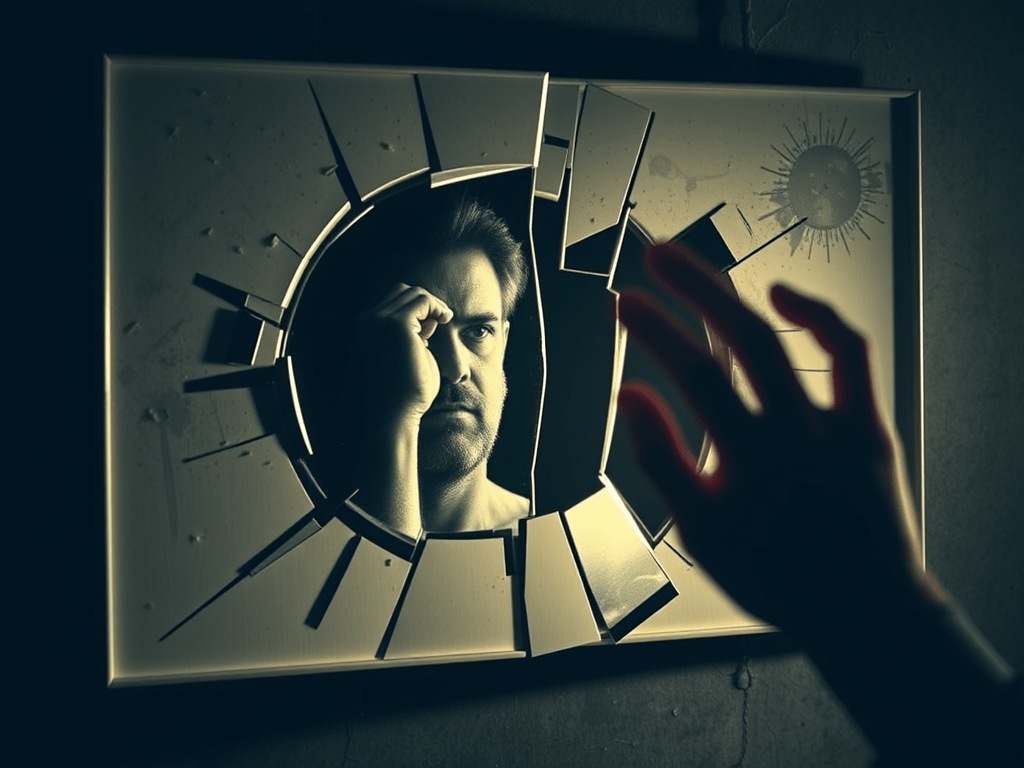
Know Thyself – 7: The Culture of Self-Making and the Tyranny of Becoming
You can be whatever you want to be.” But what if that is the root of our confusion? Modern culture does not ask us to know ourselves; it demands that we make ourselves.This shift, often hailed as liberation, has become a new tyranny. We are no longer born with a destiny to recognize, but with…
Written by
-
Know Thyself – 5: Memory, Loss, and the Illusion of the Vanishing Self
“All that is yours shall return to you, not as you remember it, but as it is.” In the experience of memory, we encounter both presence and absence.The beloved face, the longed-for moment, the words once spoken, they appear again, but only as images, pale echoes of what once was. We say things like, “She’s…
Written by

-
Know Thyself – 3: The Myth of the Fluid Self: Desire, Gender, and the Collapse of Form
“I feel like I’m becoming who I really am.”– A common expression, but beneath it, a profound contradiction. In a world where identity has been severed from Being, where presence has dissolved into process, fluidity emerges as an ideal. To be fluid is to be free, unconstrained, endlessly open to becoming. This modern myth is…
Written by