Change, Becoming, and the Nature of Being
If Being is eternal and unchanging, as classical metaphysics suggests, then change and becoming seem contradictory. However, our experience of change is undeniable. How can we reconcile these two ideas?
Being, as the fundamental reality, is consistent and indivisible. It cannot shift between existence and non-existence without ceasing to be what it necessarily is. Yet, the experience of change does not contradict this. Instead of a process where things truly appear and disappear, what seems like change is actually an eternal structure of Being, revealing itself to our limited perception as a sequence and transformation.
To illustrate: imagine a train passenger watching landscapes pass by the window. In truth, the landscapes are still; it is the passenger who moves. Similarly, what appears as change is the relational structure of beings within eternal Being. The experience of becoming is a necessity inscribed in eternity, not a sign of randomness.
Free Will and Determinism: A Unified Perspective
The apparent conflict between free will and determinism arises from a misunderstanding. To reconcile them, we must rethink what it means to choose and act within an eternal framework.
If reality is eternal and unchanging, every action, choice, and event is a necessary manifestation of what is. Philosopher Bernardo Kastrup’s insight—“What nature wills is what it must” (*)—emphasizes the inseparability of will and necessity. Choices are not external forces but arise necessarily from the structure of Being itself. Rather than independent selections, they are intrinsic aspects of the unfolding of Being. However, it is important to note that will does not create choices—what we call “willing” is simply an eternal aspect of Being, already present before any manifestation.
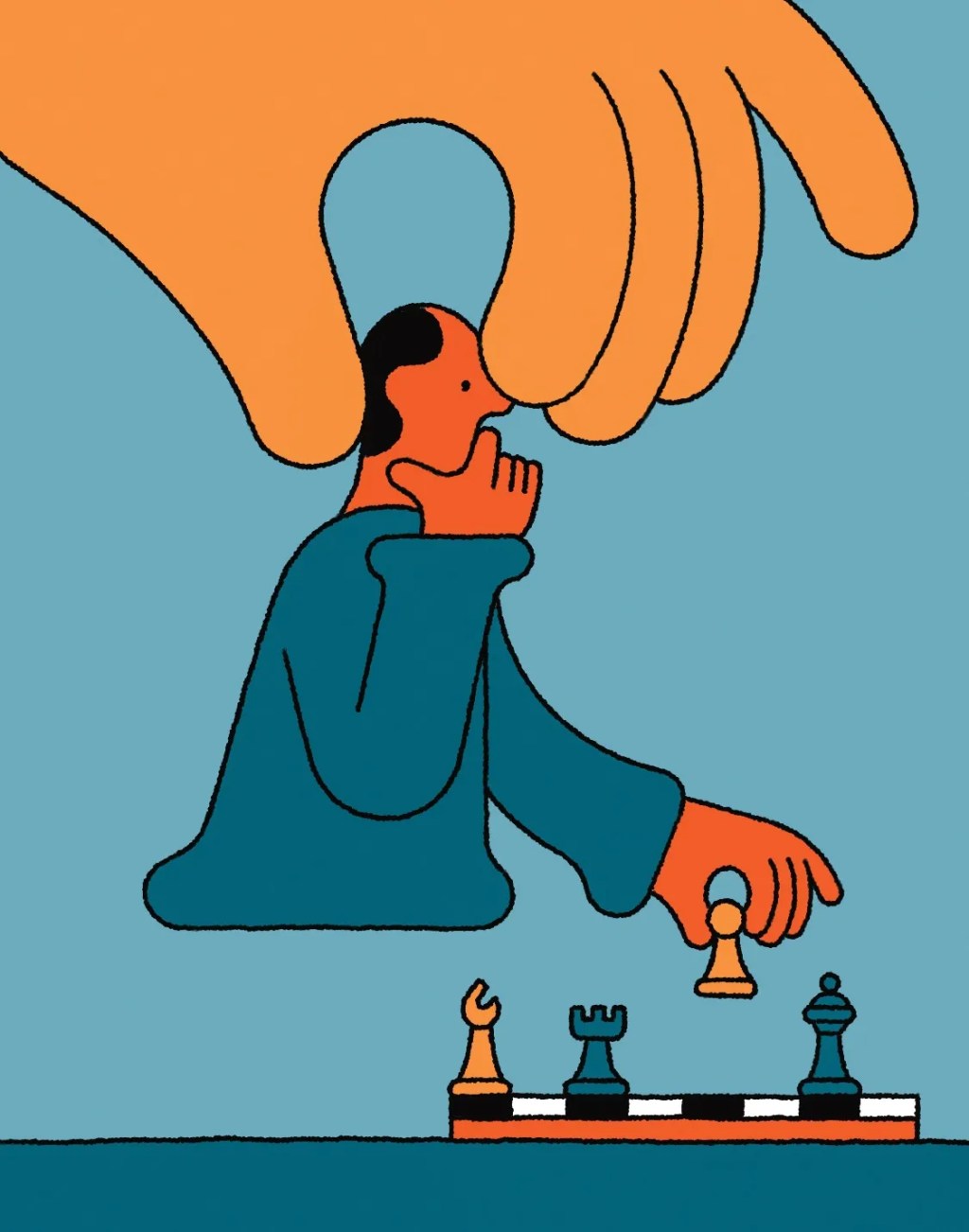
The human experience of choice arises from perceiving time as a sequence of past, present, and future. This perspective gives rise to the appearance of alternatives, the ‘could have been. From the eternal viewpoint, all moments coexist as facets of a unified reality. The perception of choice emerges from our finite perspective, where time appears as a sequence rather than as a unified whole. So, what we perceive as decisions are not contingent but fixed aspects of one’s being.
Addressing Common Misunderstandings
Personal Responsibility and Ethical Behavior:
Determinism is often criticized for negating personal responsibility and ethical behavior, yet within the Structure of Being, both remain essential. Since all actions and choices are necessary expressions of Being, responsibility is not an external imposition but an inherent aspect of necessity. Each individual, as an expression of the Structure of Being, is responsible for their actions—not because of free will, but because every action is a necessary manifestation of eternal Being.
Ethical behavior, then, is not about conforming to arbitrary moral codes or making independent choices. Instead, it arises from recognizing one’s role in the unfolding of necessity. Since every action is an essential part of the eternal order, acting ethically means understanding and accepting this necessity. To act ethically is to affirm one’s place in the eternal continuity of Being.
Nihilism, which equates Being with contingency or meaninglessness, arises from the failure to see existence as necessary. It assumes that without change or contingency, meaning itself is lost. However, meaning is not dependent on randomness or personal imposition but on the unchanging necessity of Being itself. By rejecting nihilism, one realizes that ethical behavior is neither an arbitrary choice nor a response to fear but a profound recognition of one’s place within the eternal order. Every being is eternally what it is, beyond illusions of randomness or contingency.
Fatalism:
Determinism is often confused with fatalism—the belief that effort is pointless because outcomes are fixed. This is a misunderstanding. What is eternally necessary includes human effort and decisions. Far from negating agency, determinism situates it as a core aspect of Being.
Quantum Uncertainty:
Some argue that quantum mechanics, with its uncertainty and probabilistic outcomes, challenges determinism. However, uncertainty at a fundamental level does not necessarily imply true randomness. Rather, it reflects the limits of human measurement and perception. Even in quantum mechanics, outcomes follow probability distributions governed by precise mathematical laws. What appears as randomness from a finite perspective may still be an expression of an underlying necessity within Being. Thus, determinism, properly understood, does not require strict predictability but rather acknowledges that all phenomena, even those perceived as uncertain, are part of an eternal, necessary structure.
Bridging Eternity and Time
To understand free will and determinism, we must bridge the apparent divide between time-bound experience and eternal reality.
Time is how eternal Being is perceived in our limited experience. Past, present, and future are not separate; they are parts of a unified whole. What seems like change is simply eternity unfolding within time. By understanding this, we can appreciate the coherence of reality without denying our lived experiences.
From the eternal perspective, what we call “choice” is not about selecting among alternatives. It is an eternally necessary manifestation of Being. This does not invalidate the experience of making decisions but places it within a wider context: each choice is fixed eternally and inseparable from the totality of Being.
Conclusion: Embracing the Eternal Structure of Being
Understanding that Being is eternal and unchanging reveals that existence, action, and morality are not random, but integral to the unfolding of reality. Free will and determinism, often seen as opposing forces, are simply two perspectives on the same truth.
Nihilism, while an inevitable error, points to the illusion of meaninglessness. Transcending this view, we recognize that everything has its necessary place within the eternal structure of Being. This doesn’t diminish the significance of our experiences; rather, it deepens our understanding. Every moment and action is part of the eternal unfolding, inseparable from the greater whole.
(*) Full excerpt from Bernardo Kastrup’s interview: “There is no distinction between free will and determinism. We think there is because of our conceptual confusion. At the level of what truly exists, there is no such distinction. What nature decides to do is both, what it desperately wants to do and what it must do. What nature does is the result of what nature is. Nature wills what it wills because it is what it is, and it can’t will otherwise without being something that it is not, but of course, it is what it is, so it wills what it does. There is no external environment beyond nature to impose choices on nature. What nature chooses to do comes out of itself, therefore it comes out of its being. It is a result of what it is. So, nature wills what it must will, given what it is, but it does make choices. It couldn’t make different choices because it isn’t different. Nature is what it is and not something else. It does make choices, but its choices are a direct consequence of what it is. So, from that perspective, what nature wills is what it must. What nature must is exactly what it wills. So, there is no distinction, at the level of nature, between free will and determinism. And that’s why we can both say, “you have free will, because you are part of nature and nature has free will”. But why does nature have free will? Because it is the same as determinism and determinism is true. So, by the same token, you could also say, “everything is deterministic”. Why? Because free will is true, but free will is the same thing as determinism, so everything is deterministic. We all make choices. We are part of nature. We make choices every day, thousands of choices every day; starting from whether you touch the ground with your left or your right foot the moment you step out of bed. The idea of determinism does not deny the obvious empirical fact that we are always making choices. What it denies is the abstraction that we call “the could have been”, “I could have chosen differently”. Then I would say, ‘you could only have chosen differently if you were different, but you were what you were, nature was what it was’. So, the ‘could have been’ is an abstraction and a fantasy.”
 It Is What It Is
Leave a comment