Tag: Philosophy
-
The Problem of Paradigms: When the Map Becomes the Territory
We are surrounded by explanations. Physics tells us what matter is doing, biology tells us how organisms function, psychology tells us how the mind behaves, economics tells us how people respond to incentives, and religion offers its own language for questions of meaning and purpose. Each of these ways of looking at reality can be…
Written by

-
Fear and the Eternal: Beyond the Illusion of Loss
Fear is among the most intimate and universal of human experiences. It emerges before thought, before speech, in the cry of a child who senses the absence of a parent. It lingers in the grown adult who anticipates loss, pain, or death. Fear appears as trembling in the body, as anxiety in the mind, as…
Written by
-
Truth, History, and the Destiny of Recognition
One of the most persistent misunderstandings about truth is the belief that, if it is eternal, it must also be static, mute, or indifferent to history. As if affirming the eternity of Being required denying the drama of time, culture, religion, and thought. But this opposition is false. Truth does not unfold because it is…
Written by
-
Appendix – The Inexhaustibility of Truth
If truth is understood as aletheia, as unconcealment, as what shows itself, then a further consequence follows almost immediately. Truth cannot be exhausted. This is not because truth is vague or incomplete, nor because it depends on changing perspectives. It is inexhaustible because what is does not appear all at once, nor in a single…
Written by
-
Truth Does Not Need Defenders
After following the path that led truth from certainty to suspicion, from shared horizon to provocation, one temptation remains. The temptation to defend truth. It is understandable. If truth has been relativized, dismissed, or treated as dangerous, it seems natural to want to restore it, to argue for it, to protect it from distortion. Yet…
Written by

-
Why Truth Keeps Reappearing
If truth has been so thoroughly questioned, relativized, and displaced, a natural question arises. Why does it keep coming back? Despite repeated declarations of its demise, truth remains indispensable. It returns in places where it was supposed to be irrelevant. Science relies on it. Ethics invokes it. Justice presupposes it. Even movements that explicitly reject…
Written by
-
Why Truth and Freedom Are Not Opposites
One of the deepest assumptions shaping modern thought is the idea that truth and freedom stand in opposition to one another. Truth is associated with constraint, limitation, and obligation. Freedom, by contrast, is understood as openness, choice, and self-determination. To be free is to decide for oneself. To accept truth is to submit. This assumption…
Written by
-
Dialogue After Truth, and Why It Fails
In a culture that has learned to distrust truth, dialogue is often presented as the alternative. Where truth is seen as rigid or exclusionary, dialogue is offered as open, inclusive, and humane. The idea is simple. If no one can claim to be right in any definitive sense, then conversation can remain fluid and non-threatening.…
Written by

-
Nihilism Without Drama
When the word nihilism appears, it often evokes dramatic images. Despair, meaninglessness, moral collapse, or a refusal of all values. But the form of nihilism that shapes much of contemporary thought is far quieter and far more pervasive. It does not announce itself. It hides behind reasonable assumptions about change, freedom, and openness. At its…
Written by
-
What Truth Ultimately Concerns
Up to this point, we have clarified what truth is not. It is not opinion, belief, consensus, usefulness, or sincerity. But this still leaves the central question open. If truth is not any of these things, what does it actually concern? At its most basic level, truth concerns what is. This may sound trivial, almost…
Written by

-
Truth Is Not an Opinion
One of the most common misunderstandings in contemporary discourse is the idea that truth is simply a stronger version of opinion. According to this view, people have beliefs, preferences, interpretations, and values, and truth is just what someone happens to hold more firmly, or what a majority happens to agree upon. This assumption is so…
Written by

-
The Unspoken Rules of Intelligence
Before asking what is true, or even whether truth exists, there is a more basic question that often goes unnoticed. What makes intelligent dialogue possible at all? We usually think of discussion as something natural. People talk, disagree, exchange views, and sometimes reach understanding. But none of this is automatic. Dialogue only works because certain…
Written by

-
When Truth Disappears, Emotion Takes Its Place
When truth no longer functions as a shared reference point, something else inevitably fills the gap. In contemporary culture, that something is emotion. This is not because emotions are new or suddenly more intense. Human beings have always felt anger, fear, empathy, pride, and shame. What has changed is their role. Emotion has shifted from…
Written by

-
From Truth to Perspectives: How Postmodernism Reframed Reality
To understand why truth has become so problematic, we need to look at a profound shift in how reality itself has been understood in recent decades. This shift is often gathered under the broad and somewhat vague label of postmodernism. Postmodernism did not begin as an attack on truth. It emerged as a reaction to…
Written by
-
Why Truth Has Become a Provocation
There is hardly anything more divisive today than the claim that there is truth. To say it out loud is often enough to trigger suspicion or outright dismissal. One risks being labeled reactionary, dogmatic, authoritarian, even dangerous. The mere suggestion that something might be true—not just personally meaningful or emotionally resonant, but true—has become deeply…
Written by

-
Introduction
The word truth comes from the Greek aletheia. It does not mean correctness, accuracy, or agreement. It means unconcealment, unveiling, what is no longer hidden, what shows itself. For the Greeks, truth was not something one invented or possessed. It was something that happened. Something that emerged when what is allowed itself to be seen…
Written by
-
Beyond Faith and Reason – Appendix: The Many Faces of the Divide – Beyond All Dualisms
The story of thought is often narrated as a struggle between opposites. It has worn many faces across history, yet the core dynamic remains the same: a polarity that drives movement, interpretation, conflict, and transformation. In this companion reflection, we consider how the same foundational divide explored in the main series reappears—again and again—in other…
Written by
-
Beyond Faith and Reason – 5: The Resolution – The Necessary Appearing of Truth Beyond Dualism
We have followed a path that moved from the initial tension between myth and philosophy, through the religious effort to hold heart and intellect together, into the modern rupture of reason’s autonomy and its eventual fragmentation in postmodern relativism. Now, at the threshold where every resolution has failed, and all reconciliations collapse, something else begins…
Written by

-
Beyond Faith and Reason – 1: The First Divide – Myth, Thought, and the Unfolding of Contradiction
There is a fracture that haunts the history of human consciousness, a tension as old as our first questions. We have learned to call it many names: myth and reason, faith and logic, heart and mind, East and West, feminine and masculine. At its core, however, this division reflects something far more essential than cultural…
Written by
-
Prelude to the Series “Beyond Faith and Reason”The Split Within: Heart, Brain, and the Longing for Undivided Truth
There is a tension each of us knows. One part of us longs to trust—to rest in what feels immediate, intimate, and real. Another part wants clarity, structure, and proof—something we can hold and explain. We often call them the heart and the brain. One speaks the language of love, intuition, presence; the other speaks…
Written by

-
Psychedelics and the Structure of Being – 5: Signs on the Path – Toward a Deeper Understanding of Being
For many who undergo psychedelic experiences, there is a moment—or several—in which something profound seems to break through the veil of the ordinary. These experiences can bring a sense of unity, awe, peace, or even terror. Often, they are interpreted as spiritual insights, glimpses of a deeper reality, or contact with the divine. It is…
Written by
-
In the Time of Unveiling – 5: A Witnessing Thought — Philosophy in the Time of Unveiling
In an age obsessed with answers, action, and invention, philosophy seems irrelevant — too slow, too uncertain, too abstract.What use is thought, when the world is unraveling?What help is reflection, when systems collapse and meaning slips? But that is the voice of becoming, still whispering in its final hour:Do something. Solve something. Build something. And…
Written by
-
The Unfolding of Truth – 1: The First Light: Parmenides and the Emergence of Being
Before there were systems, there was wonder. In the earliest days of philosophy, Greek thinkers turned from mythos to logos; not to dismiss the sacred, but to seek its structure. Beneath the shifting appearances of the world, they began to ask: what abides? What is the principle that does not pass away? What is real?…
Written by
-
The Unfolding of Truth Through the History of Thought – Introduction
Throughout the history of human thought, there has been a persistent intuition, often obscured, often contradicted, yet never entirely extinguished, that reality is not what it seems. From the first metaphysical inquiries in ancient Greece to the contemplative insights of Eastern sages, from the mystical speculation of late antiquity to the rational rigor of modern…
Written by

-
Christianity and the Structure of Being–A Metaphysical Map
From Plato to the Eternal Structure of Being 🔹 1. Plato (4th c. BCE) Core Move: Eternal Forms vs. Temporal World Reality = unchanging, timeless Ideas (Forms) The world of becoming = shadow, illusion, imperfection Being belongs only to the eternal; the sensible is suspended over non-being 🡺 Impact: Introduces the first metaphysical dualism→ Sets…
Written by

-
Christianity and the Structure of Being – 2: The Infiltration of Platonism
How Greek Metaphysics Entered Christian Thought In its earliest centuries, Christianity encountered a world saturated with Greek philosophy. Among the many schools of thought that shaped late antiquity, none was more influential—or more seductive—than Platonism. Plato offered a majestic metaphysical vision: a realm of eternal, unchanging Forms—the true Being of which all sensible things were…
Written by

-
The Acrobat and the Void: When Therapy Cannot Cure Nihilism
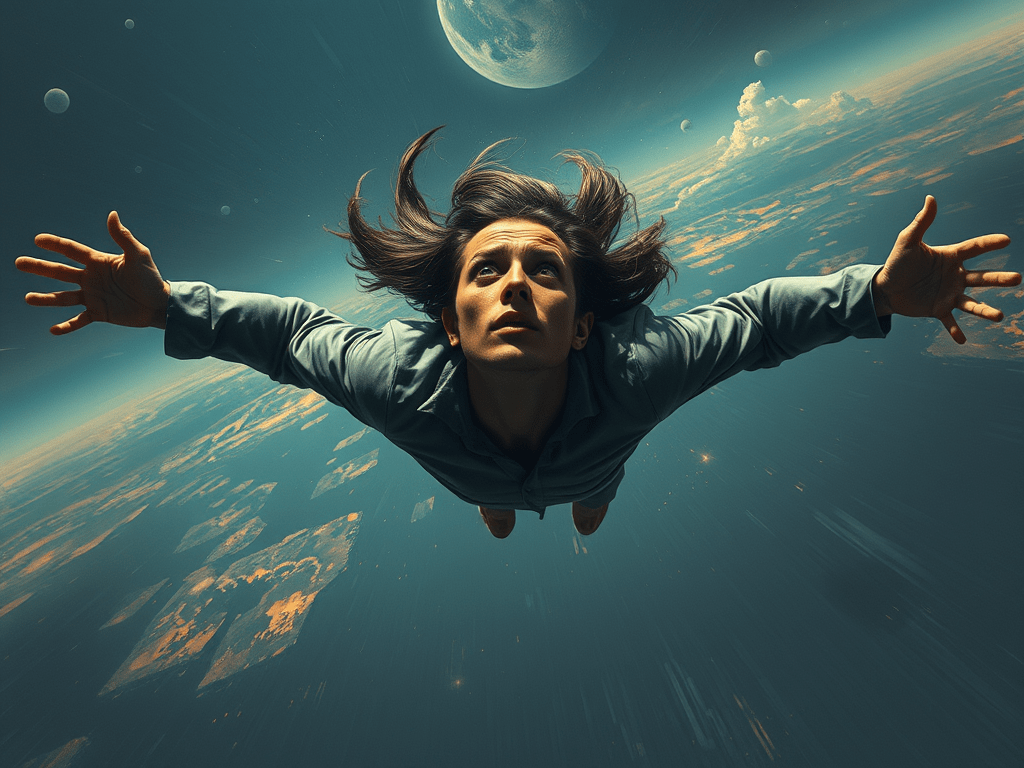
We are like acrobats who have let go of the trapeze of tradition, of metaphysics, of a world imbued with inherent meaning. For a moment, the flight was exhilarating; the freedom of self-creation, the triumph of the individual. But now we are suspended in the void, arms outstretched, waiting for a trapeze that never arrives.…
Written by
-
Contemplative Seeing and the Unshakable Center – 9
The Final Unveiling: Recognizing the Ground of Being As we bring this exploration to completion, we stand before a recognition that is both deeply familiar and profoundly transformative. Throughout history, the great traditions of religion, philosophy, and spirituality have pointed—though often in fragmented or contradictory ways—toward the same reality: the existence of a foundational ground…
Written by
-
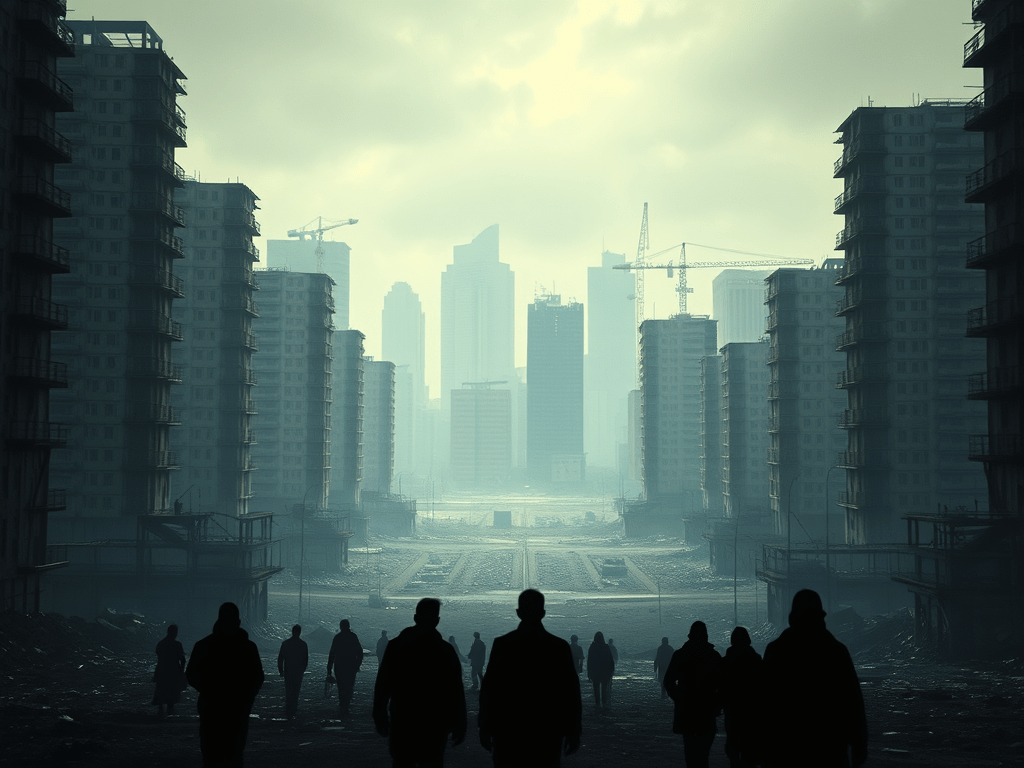
The Unbearable Truth: What Our Demographic Collapse Really Means
We are witnessing not a problem to be solved, but a fate to be understood. The converging crises of demographic implosion, unsustainable debt, and societal aging are typically diagnosed as separate policy failures: a lack of childcare incentives, flawed economic models, or medical advances that have outstripped our wisdom. But to see them this way…
Written by
-
Contemplative Seeing and the Unshakable Center
Introduction: The Unveiling of Contemplation Contemplation. The word often carries religious, mystical, or philosophical weight, evoking images of silent monks, meditating sages, or deep thinkers lost in reverie. It seems distant, reserved for those who dedicate themselves to spiritual pursuits. But is this really the case? Is contemplation something rare and otherworldly, or is it…
Written by