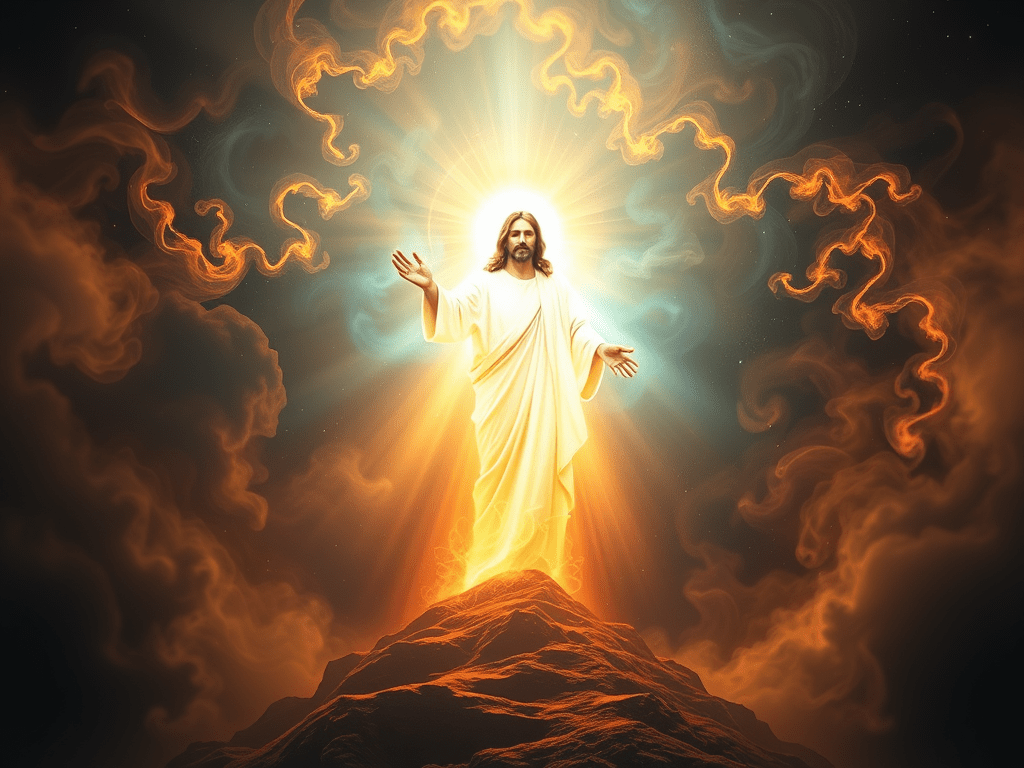
One of the most common features of Near-Death Experiences (NDEs) is the encounter with luminous presences, divine beings, or deceased loved ones. Many describe being enveloped in an all-embracing light, standing before a figure of ultimate authority, or undergoing a review of their life in the presence of compassionate observers. However, while these elements appear across cultures, the specific details vary significantly. A Christian might see Jesus, a Hindu might meet Yama, and an atheist might encounter an undefined presence of wisdom. These variations reveal a crucial truth: NDEs, while expressing the necessity of Being, are filtered through historical and cultural frameworks that shape their appearance.
The Tendency to Interpret Through Familiar Symbols
Human perception is not neutral. It is structured by prior knowledge, language, and expectations. Just as we interpret dreams through familiar imagery, so too do NDEs take on forms that align with personal and cultural backgrounds. This is why Western accounts frequently feature bright celestial landscapes, while Tibetan Buddhist reports might describe more intricate, symbolic visions. The appearing of truth does not change—what changes is how it is recognized within different conceptual structures.
This explains why some NDEs include encounters with figures who, by historical logic, could not be present. People have reported seeing relatives who were later discovered to be alive or meeting spiritual figures outside their religious tradition. These anomalies reveal that NDEs are not literal journeys into another realm but the necessary unfolding of Being as it appears within conditioned experience.
The Role of Light and the Human Need for Form
One of the most universal features of NDEs is the presence of an overwhelming light, often described as conscious, loving, and all-knowing. Some interpret this as the presence of God, others as the essence of ultimate reality. Yet, it is neither a localized entity nor a being in the conventional sense. The light represents the necessity of truth appearing in a way that finite consciousness can grasp.
But human thought is structured by distinctions—between self and other, person and environment. When confronted with what is beyond such distinctions, the mind tends to personify it. This is why the ineffable light often “becomes” a figure, a guide, or a voice. These forms are not false, but neither are they ultimate. They are the way Being manifests within the framework of finite understanding.
Judgment, Past-Life Reviews, and the Imposition of Moral Structures
Many NDEs include a “life review,” in which one sees past actions and their effects from a broader perspective. Some experience this as a process of judgment, others as a revelation of interconnectedness. But is this an actual evaluation imposed by an external authority, or does it reflect the way human consciousness interprets truth within moral and cultural frameworks?
Moral categories—right, wrong, reward, punishment—are historically conditioned. Different traditions emphasize different ethical structures, and NDE reports tend to mirror them. A devout Christian may perceive a meeting with Christ as a moment of judgment, while a Buddhist might experience an understanding of karma. Yet at the core, the fundamental insight remains the same: the appearing of one’s life as a whole, without fragmentation. The experience is not about condemnation or approval but the necessary unfolding of all that has been.
When Cultural Impositions Obscure the Eternal
While NDEs reflect an encounter with what is beyond historical conditioning, they are also shaped by it. This has led to a long-standing debate: Are NDEs proof of specific religious doctrines, or do they indicate something more universal? The answer lies beyond this dichotomy. NDEs are not “evidence” for one belief system over another; rather, they reveal how Being appears through the lens of existing structures.
It is when these structures are taken as ultimate that they obscure rather than reveal. If one assumes an NDE validates only their particular tradition, they mistake the form for the truth it expresses. The eternal does not belong to any single religion or framework. It manifests necessarily, but always under conditions that shape its interpretation.
Conclusion
Encounters with beings, light, and judgment in NDEs do not indicate a transition to a separate afterlife but the necessary appearing of truth within the structures of human experience. The forms taken by these experiences—whether religious, moral, or symbolic—are shaped by cultural frameworks but point to the same eternal reality. To recognize this is to move beyond taking NDEs as literal journeys and instead see them as glimpses of what has always been.
 It Is What It Is
Leave a comment