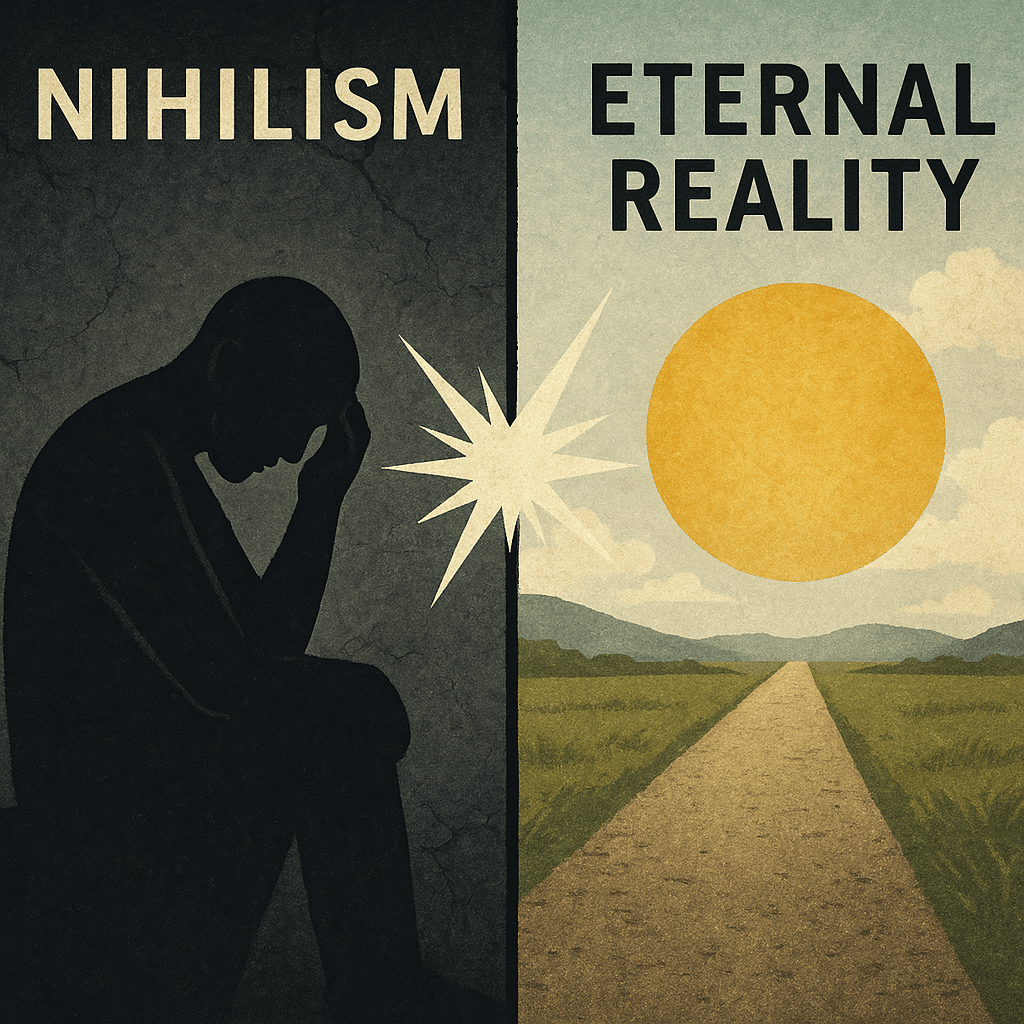
The Fear of Nihilism: Is an Eternal Reality Meaningless?
One of the most common reactions to the idea of an eternal, unchanging reality is the fear of nihilism—the belief that if everything is necessary and immutable, then life, existence, and even our individual actions might lack meaning. How can a world without change or progress be meaningful? How can an existence in which nothing ever truly happens hold any value? These are the questions that often arise when considering this perspective.
The Misunderstanding of Meaning in an Eternal Reality
The fear of meaninglessness stems from our cultural conditioning to associate meaning with becoming—change, progression, and novelty. We are taught to find value in the story of life, in the unfolding of events, and in the constant drive toward the future. Within this framework, if nothing is allowed to change, if everything is eternal, we might wonder: where does meaning fit into this picture?
This conventional view is challenged by the recognition that meaning is not contingent on change or progression. In fact, the true essence of meaning arises from the eternal, the unchanging structure of being. Meaning is not something that is added to life over time, nor is it something that depends on events unfolding or goals being achieved. Rather, meaning is inherent in the very nature of existence itself—unchanging, necessary, and eternal. It is in the recognition of this necessity that true meaning is found.
The problem with our contemporary view of meaning is that we mistake it for a process that must unfold in time. We look for meaning in events, changes, and progressions, all of which are seen as contingent. But if we shift our understanding from becoming to the eternal, we realize that meaning is not something to be achieved or created—it is simply the recognition of being as it is. Being is always already meaningful, not because it changes, but because it is.
Nihilism: The Real Meaninglessness
The true nihilism is not the recognition of eternal necessity. The real nihilism lies in the belief that being itself can somehow fall into non-being, that existence could cease to be, or that the structure of reality could collapse into nothingness. It is the belief in the possibility of nothingness that breeds despair and meaninglessness, not the recognition of being as eternal and necessary.
Nihilism comes from the misunderstanding that meaning must be contingent, something that can be lost or gained through time. But if meaning is inherent in the structure of being itself, then there is no room for nihilism. Existence, in all its forms, is the expression of this necessary, eternal structure. It cannot fall into nothingness, and in this recognition, we find true meaning—not dependent on change, but rooted in the necessity of being.
The Rejection of Becoming and the Embrace of Necessity
By rejecting the idea of becoming—of an unfolding reality driven by contingency and change—we open ourselves to a deeper, more profound understanding of existence. This understanding does not lead to despair but to a realization of the full significance of what is. Everything that is, is eternal and necessary. The world and everything in it appear as they must, and in this appearance, there is an inherent meaning that transcends the fleeting moments of time.
For those who fear the meaninglessness of an eternal reality, this perspective offers a radical shift. Far from eliminating meaning, the eternal structure of being restores it in its purest form. Meaning is not something that must emerge, develop, or be created—it is something that simply is.
The Necessity of Choice in an Eternal Reality
This brings us to another crucial question: If everything is necessary and eternal, where does free will fit into this picture? How can we act freely in a world that is already determined by necessity? How can we make choices if everything is already what it must be?
This paradox between necessity and free will is a central challenge, and it is one that we will explore in the next article, Free Will and the Necessity of Choice. There, we will delve into the apparent contradiction between the eternal, necessary nature of being and the experience of freedom in our daily lives, showing that free will is not negated by necessity but is, in fact, a necessary aspect of the structure of being itself.


Leave a comment