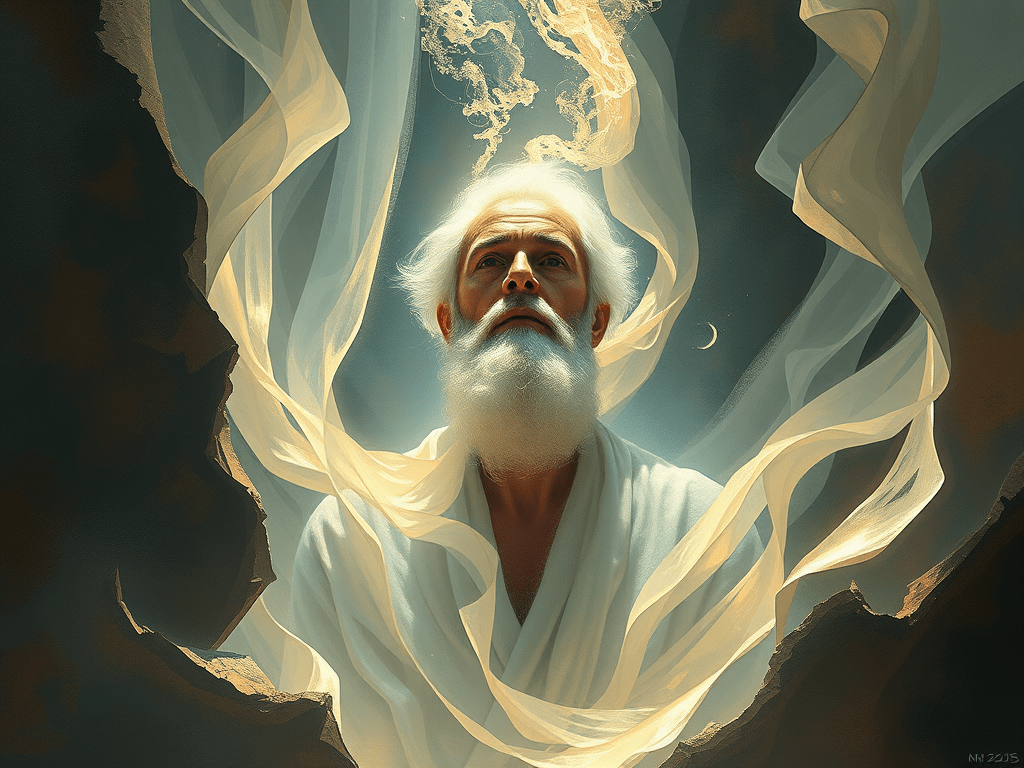
Philosophy: Not an Escape from Thought, but a Clarification
Many assume that philosophy, particularly metaphysics, seeks an abstract escape from reality, a retreat into speculation detached from lived experience. This assumption mirrors a broader misconception that truth is something to be found elsewhere rather than clarified here. However, true philosophy does not aim at abandoning thought; rather, it sharpens it, stripping away the distortions imposed by conditioned assumptions.
Among the most fundamental of these assumptions is becoming—the belief that things originate, transform, and eventually cease to be. Nearly every tradition, from religious narratives to scientific models, assumes some form of change as an intrinsic aspect of reality. Yet, as philosophy reveals, this assumption is precisely what must be interrogated. If becoming were an absolute principle, then being itself would be contingent, and the very notion of truth would collapse into relativism and contradiction.
Parmenides and Severino: Reason as the Unveiling of Necessity
Philosophy’s unveiling of truth begins with the radical realization first articulated by Parmenides: What is, is, and cannot not be. This simple yet profound statement denies the possibility of nothingness and, by extension, refutes the reality of becoming. If something truly becomes, then it moves from non-being to being or vice versa. But this is impossible—for if non-being were real, it would already be something; and if being truly ceased, it would never have been at all.
Emanuele Severino expands on this fundamental insight, showing how Western thought has, since its inception, operated under the mistaken assumption that things emerge from and return to nothingness. This misunderstanding fuels nihilism, where meaning is sought in transient, contingent realities rather than in the necessary structure of Being. By rigorously following reason, Severino reveals that all that is, eternally is. The appearing of things may shift, but their being does not alter, emerge, or disappear.
Logical Necessity vs. Subjective Insight
It is crucial to distinguish between two ways of encountering truth: logical necessity and subjective insight. The former is the domain of philosophy, where thought follows reason’s unbreakable path, revealing conclusions that cannot be otherwise. The latter is the domain of personal experience, where an individual may momentarily feel or sense something beyond ordinary perception. While such insights can be powerful, they remain subjective until they align with necessity—otherwise, they risk being fleeting intuitions rather than genuine recognitions of Being.
Many mystical traditions speak of direct experiences of reality, and while these are valuable, they must be integrated into a framework that recognizes the necessity of Being, rather than reinforcing assumptions of impermanence and change. Philosophy, then, is not opposed to profound insight, but it ensures that what is glimpsed aligns with what must be.
Conclusion: The Unveiling of Being Through Thought
To think beyond conditioned thought is not to silence thought, but to clarify its foundations. The philosophical unveiling reveals that our greatest obstacle is not the inability to experience truth, but the veils imposed by the assumption of becoming. As we move forward in this series, we will explore other modes of unveiling, from meditative silence to the radical disruptions of near-death experiences, all while maintaining the necessary foundation provided by philosophy.
 It Is What It Is
Leave a comment