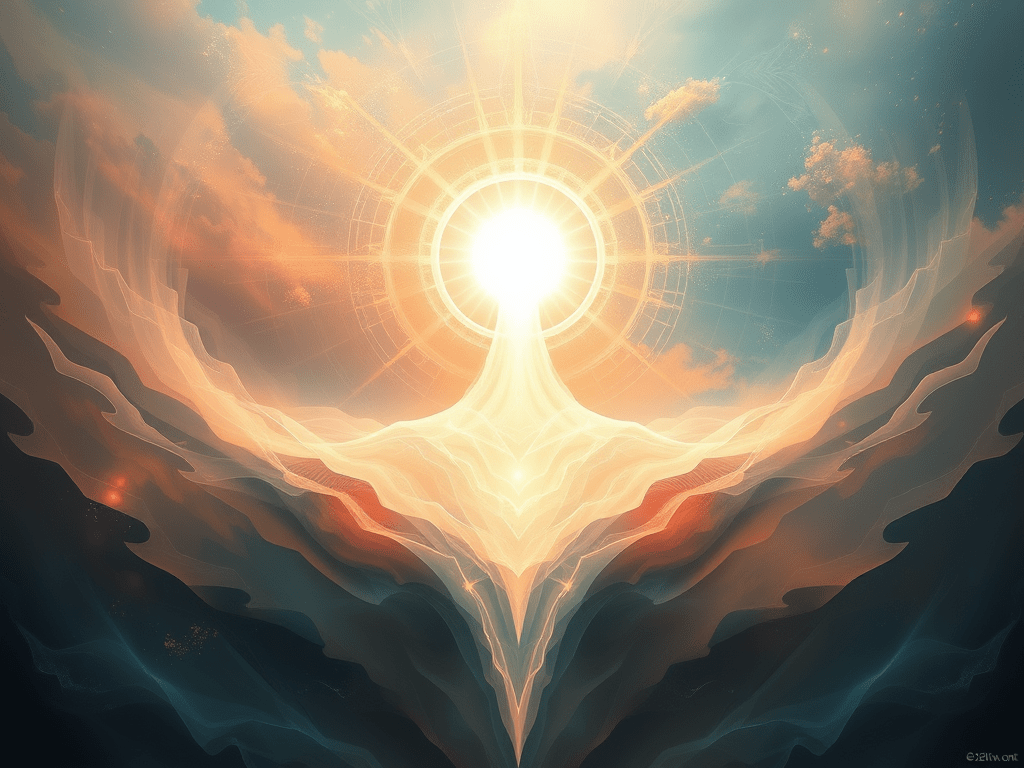
If Plato glimpsed the realm of the eternal through the Forms, fixed, timeless, and shining with intelligible clarity, Plotinus deepens the vision. In the Enneads, he presents a metaphysical unfolding of reality from a single, ineffable source: the One. This One is beyond Being, beyond intellect, beyond any distinction. It is not a being among beings, nor even the first being; it is that which makes being possible.
Plotinus does not speak of the creation of the many by the One. Creation implies a temporal act, a divine will, a moment when what is was not. Instead, the One emanates. And this emanation is not a decision or a descent; it is a necessity, like light shining from a sun that cannot help but radiate. From the One flows Nous, the realm of pure Intellect and the Forms. From Nous arises Psyche, or Soul, the dynamic principle mediating between the intelligible and the sensible world. And from Soul unfolds the material cosmos.
This metaphysical cascade is not a fall from grace, though later Neoplatonists sometimes emphasized a decline. For Plotinus, the lower retains the presence of the higher. Each level is a reflection, an echo of the One’s unity, though with increasing complexity and distance. The goal of the soul, then, is not to escape the world, but to return to its source; not spatially or temporally, but through recognition, through an inner turning that transcends multiplicity and remembers unity.
In this vision, we see the metaphysical longing of Western mysticism: the search for a hidden unity beneath appearance, the intuition that the manifold world cannot be ultimate. The soul’s journey, its longing, its love, are all signs that it is already connected to its origin.
And yet, a contradiction remains.
If all things emanate from the One, what is the status of the many? Do they truly exist, or are they merely appearances? Plotinus insists they are rea, but less real. This introduces a hierarchy of Being, where multiplicity and matter are increasingly distant from truth. The temporal becomes a kind of veil: not nothing, but not quite fully something either.
This tension is profound. The One is necessary, but the world seems contingent. The eternal is affirmed, but time and form are still caught in a movement that borders on illusion. The contradiction between Being and becoming has been softened, refined—but not resolved.
In Plotinus, then, we find both a deep affirmation and an unresolved dualism. He preserves the intuition that nothing comes from nothing, that the world is grounded in an eternal source. But he cannot escape the structure of emanation, where the many are lesser, where unity must be regained, as if it were ever lost.
It is precisely here that later thought will have to decide: is the world truly eternal, or is it something that happens? Is multiplicity the eternal showing itself, or a distancing from it? Plotinus takes us to the very threshold of this question, but he cannot yet step through it.
The appearing of Being continues.
 It Is What It Is
Leave a comment