In an age obsessed with answers, action, and invention, philosophy seems irrelevant — too slow, too uncertain, too abstract.
What use is thought, when the world is unraveling?
What help is reflection, when systems collapse and meaning slips?
But that is the voice of becoming, still whispering in its final hour:
Do something. Solve something. Build something.
And yet, when illusion falls — when the noise thins and the scaffolding crumbles — something older returns.
Something simpler.
Something truer.
Not a philosophy that constructs.
Not a thought that conquers.
But a thought that witnesses.
The End of Constructive Thought
Modern philosophy, like modern everything, has tried to build:
- Systems of ethics.
- Theories of knowledge.
- Frameworks of language and mind.
It has tried to define what is, not by recognizing it, but by explaining it — reducing Being to logic, matter, function, or form.
But in doing so, it has repeated the metaphysical error it hoped to overcome:
It treated truth as something to be made.
Now, as the metaphysics of becoming collapses, philosophy faces a choice:
Either continue building — or begin seeing.
Either defend its methods — or surrender to what appears.
This is the moment not of construction, but of conversion.
To Think Is to Remain
In the time of unveiling, the philosopher is no longer the builder of systems or the legislator of meaning.
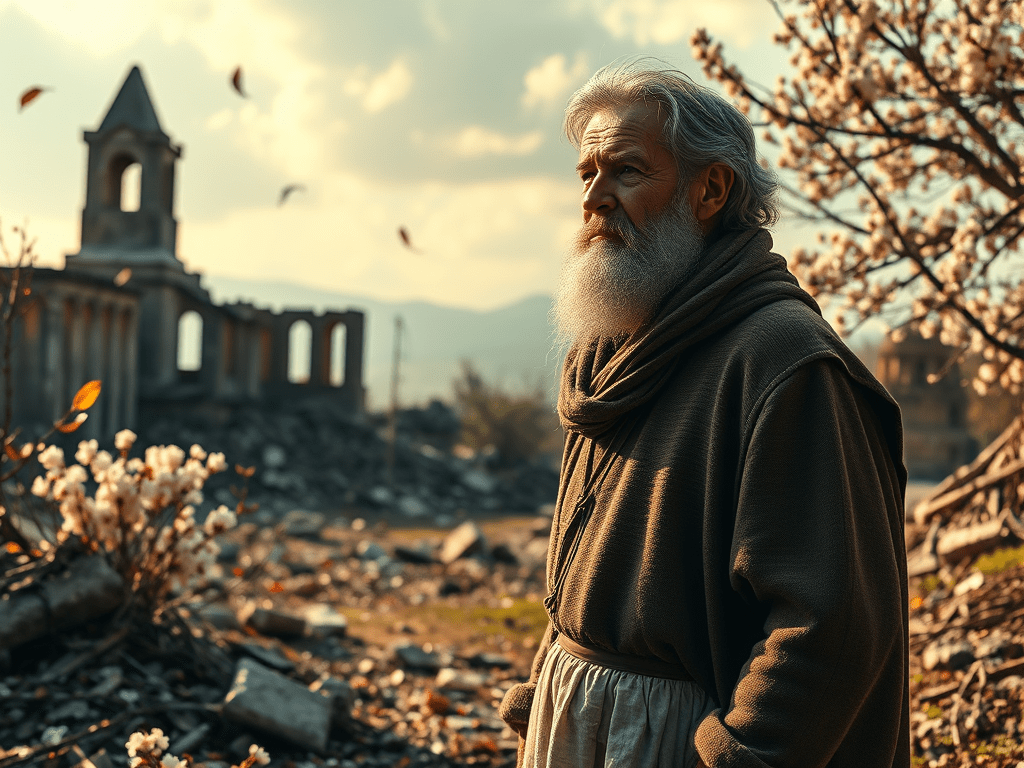
The philosopher becomes a witness.
To think is to remain.
To stay with what is.
To refuse the temptation to reduce, to manipulate, or to control.
This thought is not passive.
It is not idle.
It is reverent.
It dares to look at what is — as it is — and say:
This, too, is Being.
And it cannot not be.
The Philosopher as Seer
The true philosopher no longer asks, “How can I change the world?”
But rather, “What is appearing — and how can I be faithful to it?”
They speak not as masters of knowledge, but as voices of clarity.
They do not propose systems.
They name what shines.
They remain with the real when others flee into nostalgia or invention.
This is not withdrawal.
It is depth.
It is choosing to be grounded not in answers, but in the structure of truth itself.
Joy as the Final Tone
The thought that witnesses is not grim.
It is not heavy with critique or urgency.
It is joyful — not because the world is fixed, but because truth has never left.
It is joyful because it sees:
That what is, cannot not be.
That the eternal still shines, even now.
That the collapse of illusion is not the end — but the beginning of glory.
This is the final tone of philosophy: not despair, not pride, but joy.
A joy that endures. A joy that sees.
A joy that remains.
A Final Word
This series ends where the others have led:
• From the exposure of time
• Through the unveiling of the self
• Into the clarity of love
• And finally, to the courage of enduring truth in history.
This final thought is not a conclusion.
It is a standing place — a silence that sees, a clarity that waits, a witness that will not look away.
Because the truth has not disappeared.
Only the veil has.
And now, the light begins to shine again.
 It Is What It Is
Leave a comment