Tag: Structure of Being
-
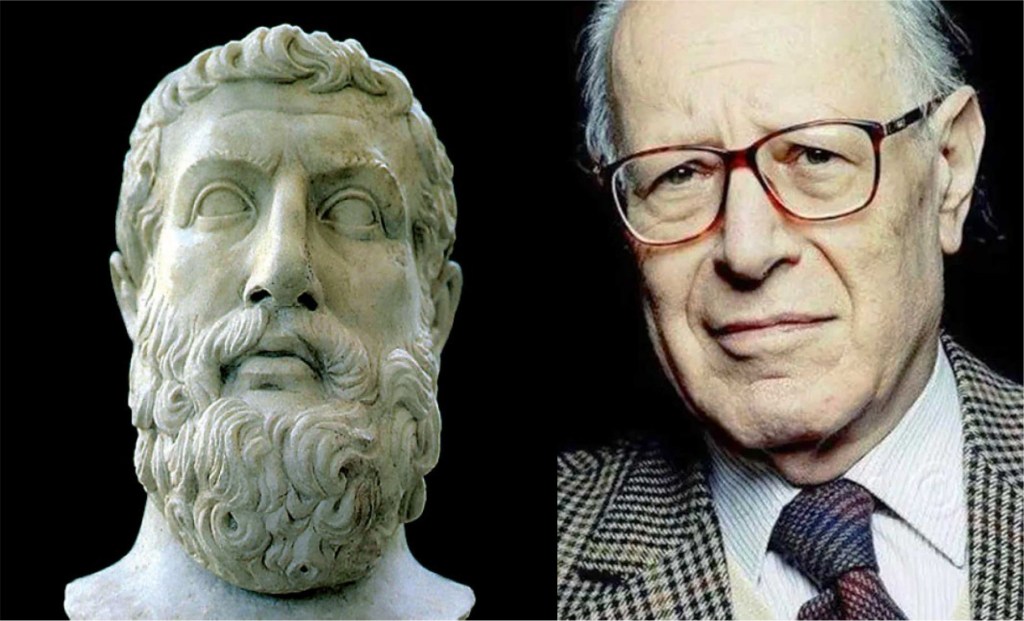
Post 43 – The Structure of Being: Its Unfolding from Parmenides to Severino
The history of Western thought is the history of the appearing of truth—an appearing that first manifested with Parmenides but remained incomplete, leading to millennia of nihilism before culminating in the necessity of its fuller recognition with Emanuele Severino. The unfolding of the structure of Being is not merely an intellectual progression but the necessary…
Written by
-
Understanding the Structure of Being – 7
The Challenge of Language: How Words Reinforce Illusion Language is the medium through which we express, conceptualize, and communicate reality. Yet, it is also one of the greatest barriers to understanding the eternal structure of being. The very words we use are steeped in the assumption of becoming—of things arising, changing, and perishing. As it…
Written by

-
Understanding the Structure of Being – 6
The Misunderstanding of Nothingness: The Root of All Confusion At the foundation of nearly every misconception about reality—about time, causality, free will, and even meaning itself—lies a single, pervasive error: the belief in nothingness. The very idea that things can “come into being” or “cease to exist” is inseparable from the assumption that there is…
Written by

-
Post 42 – The Unfolding Recognition of the Structure of Being
Throughout the history of human thought, various philosophical, scientific, and religious frameworks have sought to describe the nature of reality. These frameworks—whether ancient mythologies, classical philosophies, or modern scientific theories—represent humanity’s ceaseless attempt to uncover the truth of existence. However, upon closer examination, many of these perspectives reveal contradictions, fragmentary explanations, or assumptions that lead…
Written by
-
Understanding the Structure of Being – 5
Free Will and the Necessity of Choice Few concepts feel as fundamental to human experience as free will. We live with the conviction that we are active agents, capable of making choices, shaping our lives, and determining our future. And yet, if everything that is must necessarily be—if reality unfolds as an eternal, immutable structure—where…
Written by

-
Near Death Experiences 4: Light, Beings, Encounters and Cultural Filters
One of the most common features of Near-Death Experiences (NDEs) is the encounter with luminous presences, divine beings, or deceased loved ones. Many describe being enveloped in an all-embracing light, standing before a figure of ultimate authority, or undergoing a review of their life in the presence of compassionate observers. However, while these elements appear…
Written by
-
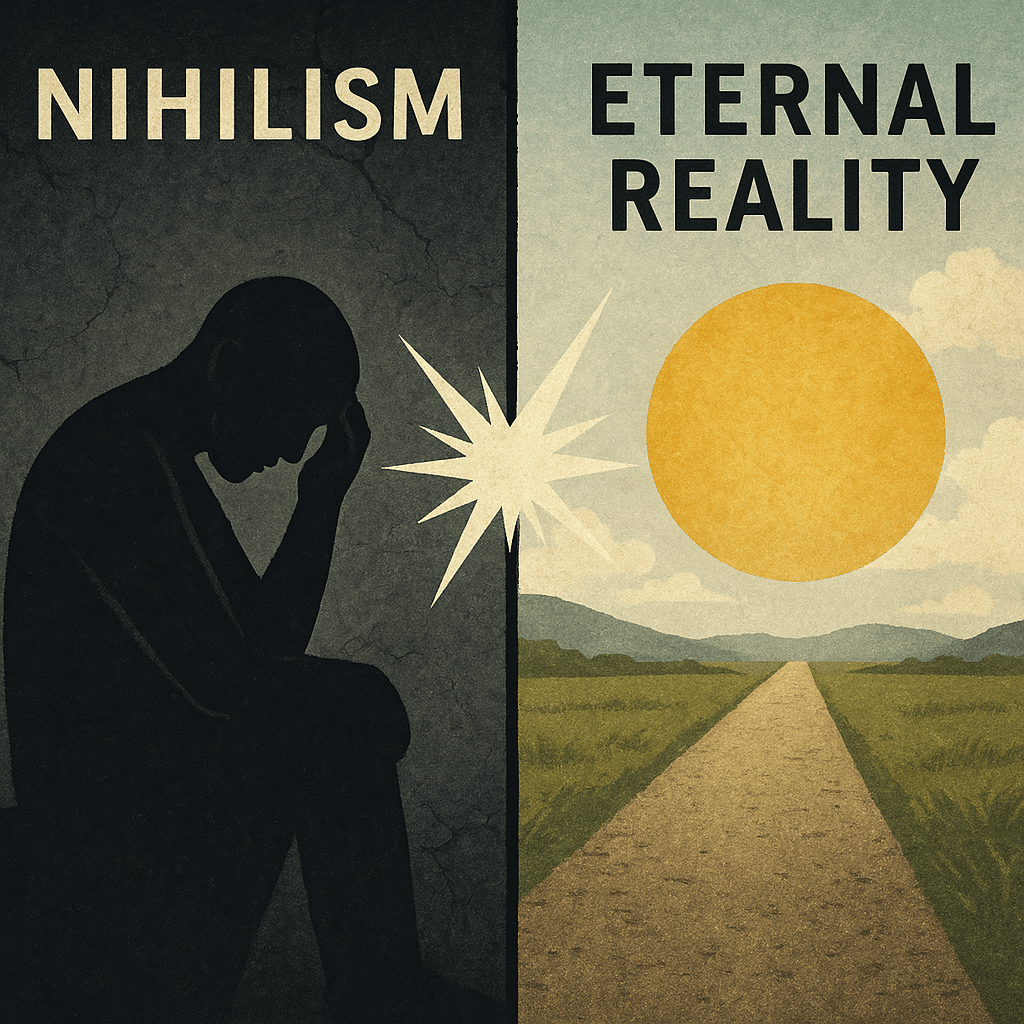
Understanding the Structure of Being – 4
The Fear of Nihilism: Is an Eternal Reality Meaningless? One of the most common reactions to the idea of an eternal, unchanging reality is the fear of nihilism—the belief that if everything is necessary and immutable, then life, existence, and even our individual actions might lack meaning. How can a world without change or progress…
Written by
-
Understanding the Structure of Being – 3
Causality and the Persistence of the Chain of Events In everyday experience, causality—the relationship between causes and their effects—feels like an undeniable truth. We assume that every event has a cause, and every action, a corresponding effect. The idea that one event follows another is so deeply ingrained in our understanding of the world that…
Written by

-
Understanding the Structure of Being – 2
Science, Common Sense, and the Illusion of Time Time is one of the most unquestioned aspects of human experience. We measure it, plan by it, and recall the past while anticipating the future. Science, common sense, and everyday perception all seem to confirm that time is real—an objective framework within which all things move, change,…
Written by

-
Post 40 – Nihilism, Mental Health Struggles, and the Role of Technology
Nihilism and the Rise of Mental Health Struggles In recent decades, mental health struggles—including depression, suicide, and substance abuse—have surged at an alarming rate. This rise in psychological distress is not an isolated phenomenon but a symptom of the existential crisis unleashed by postmodern relativism and nihilism. When objective truth is denied and meaning is…
Written by

-
Understanding the Structure of Being – 1
The Inescapable Belief in Becoming One of the most immediate and profound difficulties in understanding the Structure of Being is the deeply ingrained belief that things come into existence and pass away. This belief—what Emanuele Severino calls “becoming”—is not merely a theoretical assumption but a fundamental lens through which we perceive reality. We do not…
Written by

-
Near Death Experiences 3:Language and the Impossibility of Describing the Eternal
A striking feature of Near-Death Experiences (NDEs) is the recurring claim that they are “beyond words.” Many who undergo NDEs struggle to articulate what they have seen, felt, or understood, often resorting to paradoxes: It was more real than reality. I experienced everything at once, but it wasn’t time as we know it. The light…
Written by

-
Understanding the Structure of Being: An Introduction
Many who first encounter the Structure of Being, as revealed in Emanuele Severino’s thought, find themselves facing profound difficulties—not because the truth is obscure, but because habitual ways of thinking resist it. The idea that being is eternal, that nothing truly comes into or goes out of existence, contradicts the deeply ingrained belief in becoming—the…
Written by

-
Post 39 – The Unfolding of Eternal Truth: NDEs, Relativity, and the Aporia of Nothingness
Introduction: Convergence of Phenomena and the Unfolding of Truth In recent decades, we’ve observed a remarkable convergence of phenomena pointing toward a deeper, universal truth: the eternal Structure of Being. Near-Death Experiences (NDEs), advancements in our understanding of relativity, and the philosophical resolution of the aporia of nothingness all suggest that something profound is unfolding…
Written by
-
Necessity – A Necessary Clarification
The words necessity, necessary, and necessarily appear frequently in the posts on this site, primarily in reference to the Structure of Being, rather than in their common everyday usage. Typically, necessity is understood as something required by circumstances, causes, or logical conditions—something that must happen due to external constraints. This interpretation remains bound to the…
Written by

-
Near Death Experiences 2: The Illusion of Linear Time
One of the most pervasive features of Near-Death Experiences (NDEs) is their apparent structure as a journey—a passage from life to death, from darkness to light, from earthly existence to an encounter with something beyond. Many accounts describe moving through tunnels, crossing thresholds, or entering vast, radiant spaces. Others speak of being sent back, of…
Written by

-
Near Death Experiences 1: Beyond the Limits of Interpretation
Near-Death Experiences (NDEs) have been recorded across cultures and historical periods, with strikingly similar elements recurring in diverse traditions. Reports of luminous beings, out-of-body perceptions, overwhelming peace, and encounters with deceased loved ones transcend specific religious or philosophical frameworks. Yet, the interpretations of these experiences are deeply shaped by the conceptual structures available within each…
Written by
-
Post 33 – The Structure of Being: The Necessity of What Is
The foundation of everything discussed in this blog was laid in the introduction and early posts. Readers who begin with later entries, without that groundwork, may find it difficult to grasp the frequently mentioned Structure of Being and its implications. While the explanation here is necessarily brief, I remind the reader that this blog is…
Written by

-
Introduction to the Series: NDEs and the Structure of Being
This series explores Near-Death Experiences (NDEs) through the lens of the eternal Structure of Being. While we have touched on this subject before, its depth and complexity warrant a more focused examination. Over eight weekly articles, we will move beyond conventional interpretations, analyzing NDEs in light of the necessity of Being. Often framed through religious,…
Written by

-
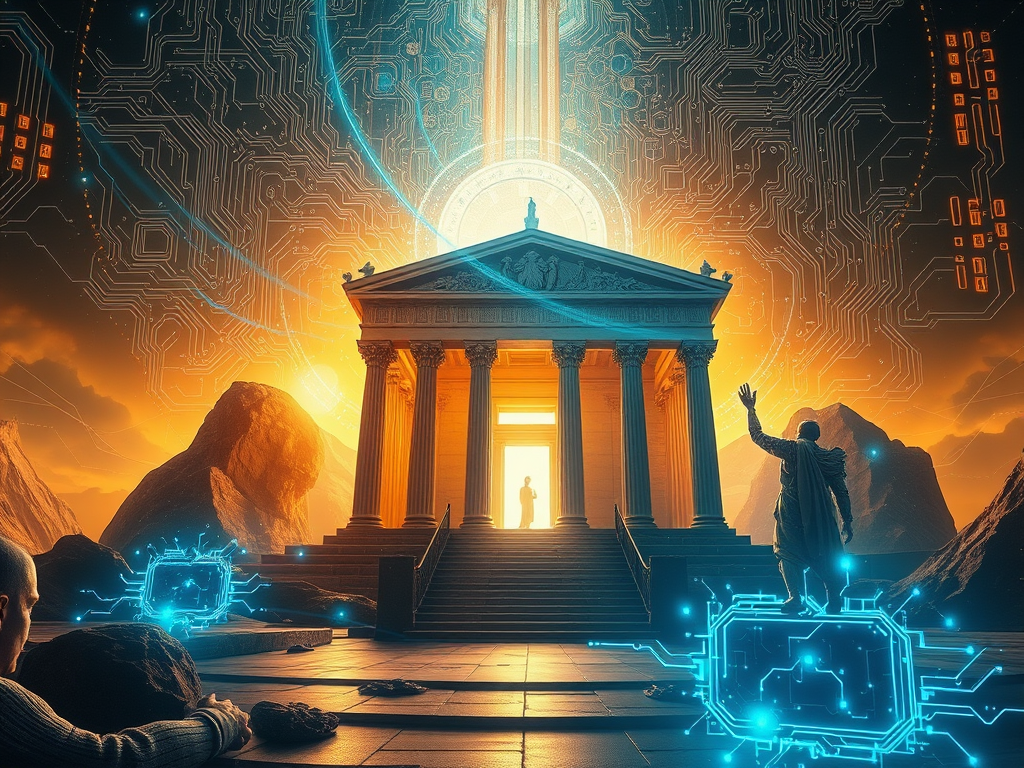
Post 31 – The Unfolding of Thought: From Religious Meta-Narratives to Technological Devotion
Throughout history, humanity has shaped its understanding of existence through various grand narratives, each attempting to explain the nature of reality and the role of human beings within it. These narratives have evolved—from religious explanations rooted in an eternal divine order, to secular philosophies grounded in naturalism, to the nihilistic skepticism of the modern era.…
Written by
-
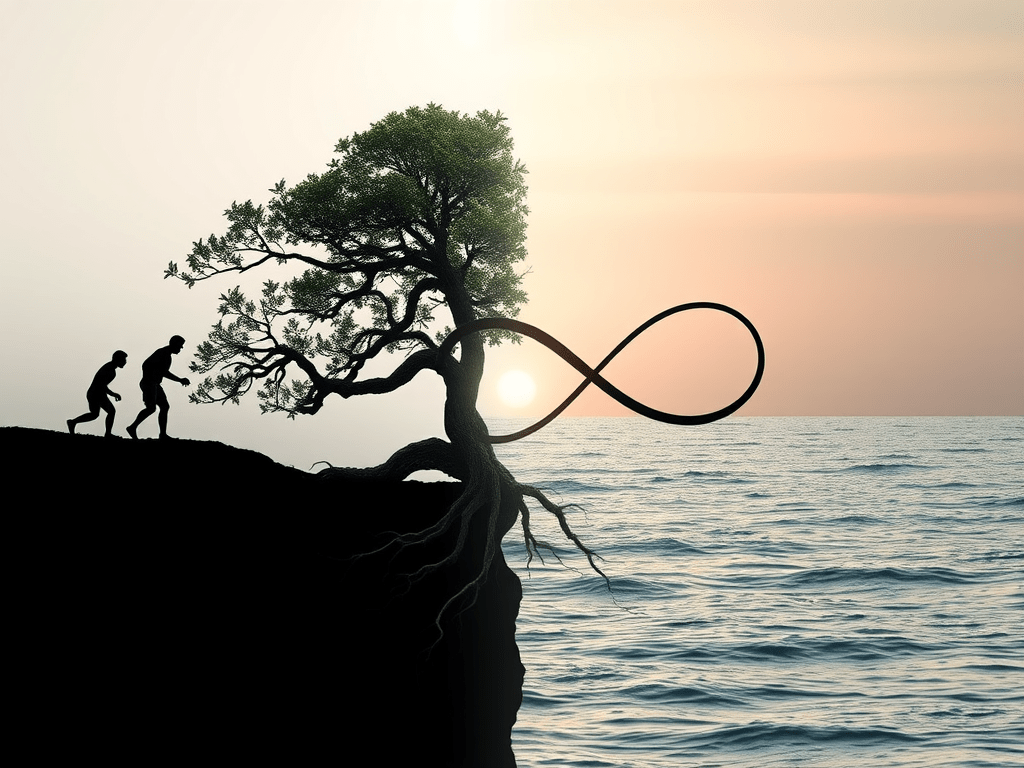
Post 30 – The Structure of Being and the Impossibility of Darwinian Evolution: A Philosophical Critique
Introduction Darwinian evolution, as understood in modern biology, explains the diversity of life through gradual transformation over time, driven by natural selection, random mutation, and adaptation. This scientific paradigm assumes that beings emerge, evolve, and give rise to new forms—a process rooted in the belief that reality unfolds through becoming. The Structure of Being radically…
Written by
-
Post 27 – The Structure of Being on the Illusion of Dualism
Introduction The Structure of Being perspective challenges a series of dualisms that are often taken for granted. By questioning the very idea of becoming—that things emerge, change, and vanish—this view exposes a fundamental mistake in our understanding of time and existence. This mistaken view gives rise to several apparent dualisms: Moreover, these themes resonate with…
Written by

-
Post 25 – How the Structure of Being Compares to Other Philosophies
The Structure of Being, as explored in this blog, shares insights with many philosophical traditions—both Eastern and Western. However, it also takes a radically different stance on key issues: What is real? What is illusion? Can we “wake up” to truth? And if so, what does that actually mean? Most traditions agree that we are…
Written by

-
Post 18 – A Person, Their Moments, and Eternity
The Eternal Nature of Moments and the Illusion of Becoming According to the “Original Structure,” every moment is eternal. No moment arises from nothing or vanishes into nothing to make way for the next, as a nihilistic perspective assumes. In this view, a person is the totality of all their eternal moments. But how is…
Written by

-
Post 17 – The Infinite Whole: Understanding Love, Suffering, and Reality
The Impersonal and the Personal When we analyze the nature of Being, we find that it is an unchanging, eternal whole. Nothing truly comes into existence or disappears: everything simply is, necessarily and forever. This perspective may seem impersonal, but it does not deny the distinctions we perceive within existence. Rather than being random or…
Written by

-
Post 8 – Eternal Being and the Illusion of Change: Eastern Insights and Nihilistic Paradoxes
The East“For the soul, there is neither birth nor death at any time.It has not come into being, does not come into being, and will not come into being.It is unborn, eternal, ever-existing, and primeval.It is not slain when the body is slain.”— Bhagavad Gita, Chapter 2, Verse 20 This verse from the Bhagavad Gita…
Written by

-
Post 5 – A Truth That Cannot Be Shaken
Two Selves in One We are always within the Truth. We embody our true being, yet in time, we perceive it only in fragments—one fleeting moment at a time. This fractured perception obscures the whole. Unconsciously, we know the Truth because we are it; however, consciously, we perceive only its fleeting fragments: the present moment.…
Written by

-
Post 3 – The Structure of Being
In the previous posts, we explored a fundamental misunderstanding about the nature of reality and outlined a path toward resolving this contradiction. Before addressing the inevitable questions raised by the conclusion, that everything physical or abstract is eternal, let’s revisit some key ideas. The Subjectivity of Time and the Eternity of All Things When considering…
Written by

-
Post 1 – At the Roots of Western Thought
A Western Problem? In progressive Western societies, we take pride in the freedom to think and believe as we choose. Individualism and self-determination are highly valued ideals. Yet, despite this emphasis on personal autonomy, our thinking is profoundly shaped by cultural and historical frameworks that influence us in ways we often fail to recognize. While…
Written by
 It Is What It Is