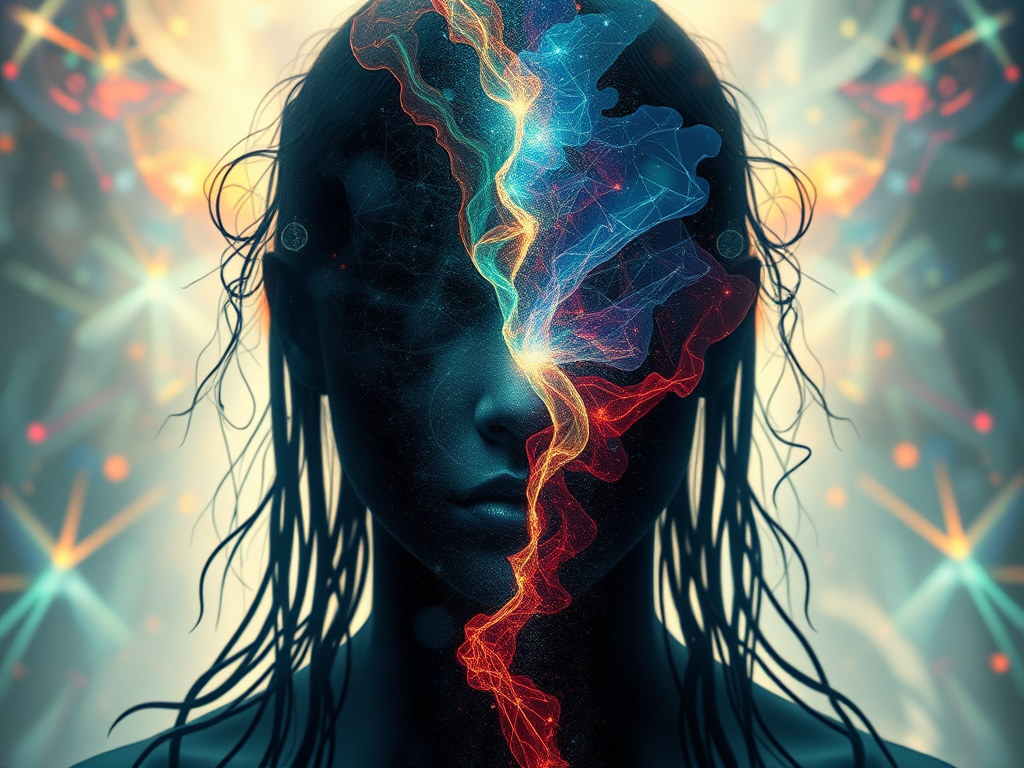
In recent years, the conversation around psychedelics has shifted from the esoteric to the therapeutic. Once the domain of mystics and seekers, substances like psilocybin, MDMA, and ayahuasca are now being explored in clinical settings to treat trauma, depression, and existential anxiety. The stories are compelling: people describe profound breakthroughs, emotional release, and a newfound sense of peace. Yet behind the promise of healing, a question remains:
Is what we call healing always real healing? And more radically: can any healing be real if it does not touch the eternal?
The Ambiguity of Healing
The modern therapeutic framework tends to define healing as the alleviation of symptoms. If a person feels less anxious, more integrated, more at peace, the treatment is deemed successful. Psychedelics, in this light, are tools for psychological repair. But what if this sense of repair, though beneficial, is not yet a return to truth? What if, instead of revealing the eternal self, it merely reshapes the illusion?
To suggest this is not to diminish the value of emotional breakthroughs. Relief from trauma is not trivial. But if our sense of self remains bound to becoming—to time, to contingency, to the illusion that we are born and will cease—then the healing is still occurring within the horizon of suffering. It is not the end of the wound, but the reorganization of pain within a more tolerable form.
Trauma and the Dislocation of Being
Trauma ruptures our sense of continuity. It dislocates us from time, self, and meaning. In this dislocation, the self often clings to identity, to narrative, to memory—in an effort to preserve coherence. Psychedelics can dissolve these constructions, sometimes allowing a glimpse beyond the reactive self. But here again the risk is great: in the absence of ontological grounding, one may encounter fragmentation rather than freedom.
True healing does not simply remove pain. It recontextualizes it. It sees even the appearance of suffering as belonging to a deeper necessity. The goal is not to erase the past, but to unveil the truth that was never absent: the eternal self, which is not wounded, not lost, not in need of repair.
The Eternal Self and the Misunderstood Cure
The self we seek to heal is often the self we falsely believe ourselves to be. It is the self of narratives, memories, hopes, and wounds. It is the self that moves through time. But what if healing lies not in restoring this self, but in seeing through it? What if the true self is not something we become, but something that already is—unbroken, necessary, eternal?
This recognition is not a psychological event. It is not a feeling of closure or acceptance. It is the appearing of truth: that which cannot not be. The eternal self is not a state one enters through therapy or ritual. It is the self that appears when the illusion of becoming begins to dissolve.
Some Near Death Experiences offer glimpses of this self. In moments when life seems to end, many report a sudden awareness of timelessness, of being held in a reality that cannot be shaken. There is no therapy here, no method—only the raw unveiling of what is. Psychedelics may mimic this, but without the grounding in the necessity of Being, the glimpse may become one more illusion, one more state to seek.
Healing as Recognition
Real healing does not consist in a return to function or the absence of symptoms. It is the recognition of the self as eternal. Only in this light can pain, trauma, and even death lose their sting. They still appear, but they no longer define.
In this sense, the healing sought through psychedelics is not wrong—but it is incomplete. It may be a step toward the truth, a sign on the path. But unless it culminates in the recognition of Being, it remains within the circle of becoming. It is not yet liberation.
To truly heal is to see that we were never broken. Not because nothing happened, but because that which is eternal cannot be wounded. The trauma, the loss, the story—all appear. But they appear within a light that is not contingent. That light is who we are.
Conclusion of the Series: Toward the Recognition of Being
Across this series, we have explored the promises and perils of psychedelics through the lens of the eternal structure of reality. We have seen how altered states can open perception, challenge assumptions, and even point toward truth. But we have also seen that without a deeper understanding of Being, these glimpses may remain fleeting or misleading.
Philosophy, mystical experience, and even suffering itself all participate in the unfolding of truth. Yet the recognition of Being is not dependent on any of these. It is not the product of effort or insight. It is the inevitable appearing of what cannot not be.
The self that seeks healing is already whole. The truth we chase is already here. What remains is to see—not through visions or substances, but in the light of necessity—that what is, is eternal.


Leave a Reply