Tag: Appearing of Truth
-
Truth Will Set You Free… But First It May Unsettle Everything
We often speak of truth as though it were necessarily comforting. “Truth will set you free” sounds like a promise. Behind it is an image of liberation in which something false is removed, clarity arrives, and we are finally able to live without the burdens that kept us confined. There is something deeply true in…
Written by

-
The Eternal Rhythm of Light and Darkness 2
The Necessary Contradiction at the Heart of Appearance “Truth appears in opposites.”Meister Eckhart Human experience seems governed by contrast. We speak of insight emerging from confusion, peace from turmoil, light from darkness. This pattern feels unavoidable, as though truth itself required opposition in order to be known. But is contradiction a feature of reality, or…
Written by

-
The Eternal Rhythm of Light and Darkness 1
A Severinian Perspective We experience life as a rhythm. Clarity seems to follow confusion, joy appears after suffering, light seems to emerge from darkness. This oscillation feels fundamental, almost sacred, as though reality itself moved by cycles of loss and recovery. Many philosophies and spiritual traditions have treated this rhythm as the very structure of…
Written by

-
Appendix – The Inexhaustibility of Truth
If truth is understood as aletheia, as unconcealment, as what shows itself, then a further consequence follows almost immediately. Truth cannot be exhausted. This is not because truth is vague or incomplete, nor because it depends on changing perspectives. It is inexhaustible because what is does not appear all at once, nor in a single…
Written by

-
Truth Does Not Need Defenders
After following the path that led truth from certainty to suspicion, from shared horizon to provocation, one temptation remains. The temptation to defend truth. It is understandable. If truth has been relativized, dismissed, or treated as dangerous, it seems natural to want to restore it, to argue for it, to protect it from distortion. Yet…
Written by

-
Why Truth Keeps Reappearing
If truth has been so thoroughly questioned, relativized, and displaced, a natural question arises. Why does it keep coming back? Despite repeated declarations of its demise, truth remains indispensable. It returns in places where it was supposed to be irrelevant. Science relies on it. Ethics invokes it. Justice presupposes it. Even movements that explicitly reject…
Written by

-
Why Truth and Freedom Are Not Opposites
One of the deepest assumptions shaping modern thought is the idea that truth and freedom stand in opposition to one another. Truth is associated with constraint, limitation, and obligation. Freedom, by contrast, is understood as openness, choice, and self-determination. To be free is to decide for oneself. To accept truth is to submit. This assumption…
Written by
-
Dialogue After Truth, and Why It Fails
In a culture that has learned to distrust truth, dialogue is often presented as the alternative. Where truth is seen as rigid or exclusionary, dialogue is offered as open, inclusive, and humane. The idea is simple. If no one can claim to be right in any definitive sense, then conversation can remain fluid and non-threatening.…
Written by

-
Nihilism Without Drama
When the word nihilism appears, it often evokes dramatic images. Despair, meaninglessness, moral collapse, or a refusal of all values. But the form of nihilism that shapes much of contemporary thought is far quieter and far more pervasive. It does not announce itself. It hides behind reasonable assumptions about change, freedom, and openness. At its…
Written by

-
What Truth Ultimately Concerns
Up to this point, we have clarified what truth is not. It is not opinion, belief, consensus, usefulness, or sincerity. But this still leaves the central question open. If truth is not any of these things, what does it actually concern? At its most basic level, truth concerns what is. This may sound trivial, almost…
Written by

-
Truth Is Not an Opinion
One of the most common misunderstandings in contemporary discourse is the idea that truth is simply a stronger version of opinion. According to this view, people have beliefs, preferences, interpretations, and values, and truth is just what someone happens to hold more firmly, or what a majority happens to agree upon. This assumption is so…
Written by

-
The Unspoken Rules of Intelligence
Before asking what is true, or even whether truth exists, there is a more basic question that often goes unnoticed. What makes intelligent dialogue possible at all? We usually think of discussion as something natural. People talk, disagree, exchange views, and sometimes reach understanding. But none of this is automatic. Dialogue only works because certain…
Written by

-
When Truth Disappears, Emotion Takes Its Place
When truth no longer functions as a shared reference point, something else inevitably fills the gap. In contemporary culture, that something is emotion. This is not because emotions are new or suddenly more intense. Human beings have always felt anger, fear, empathy, pride, and shame. What has changed is their role. Emotion has shifted from…
Written by

-
From Truth to Perspectives: How Postmodernism Reframed Reality
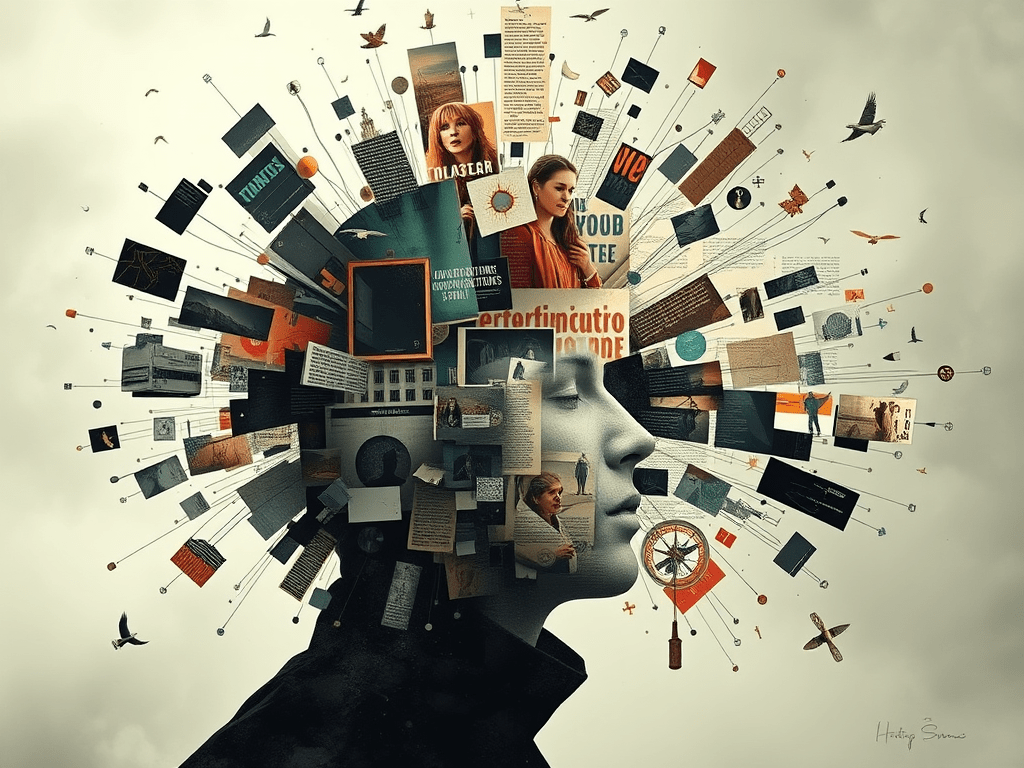
To understand why truth has become so problematic, we need to look at a profound shift in how reality itself has been understood in recent decades. This shift is often gathered under the broad and somewhat vague label of postmodernism. Postmodernism did not begin as an attack on truth. It emerged as a reaction to…
Written by
-
Why Truth Has Become a Provocation
There is hardly anything more divisive today than the claim that there is truth. To say it out loud is often enough to trigger suspicion or outright dismissal. One risks being labeled reactionary, dogmatic, authoritarian, even dangerous. The mere suggestion that something might be true—not just personally meaningful or emotionally resonant, but true—has become deeply…
Written by

-
Introduction
The word truth comes from the Greek aletheia. It does not mean correctness, accuracy, or agreement. It means unconcealment, unveiling, what is no longer hidden, what shows itself. For the Greeks, truth was not something one invented or possessed. It was something that happened. Something that emerged when what is allowed itself to be seen…
Written by

-
The Great Divide – 2: History as Battlefield
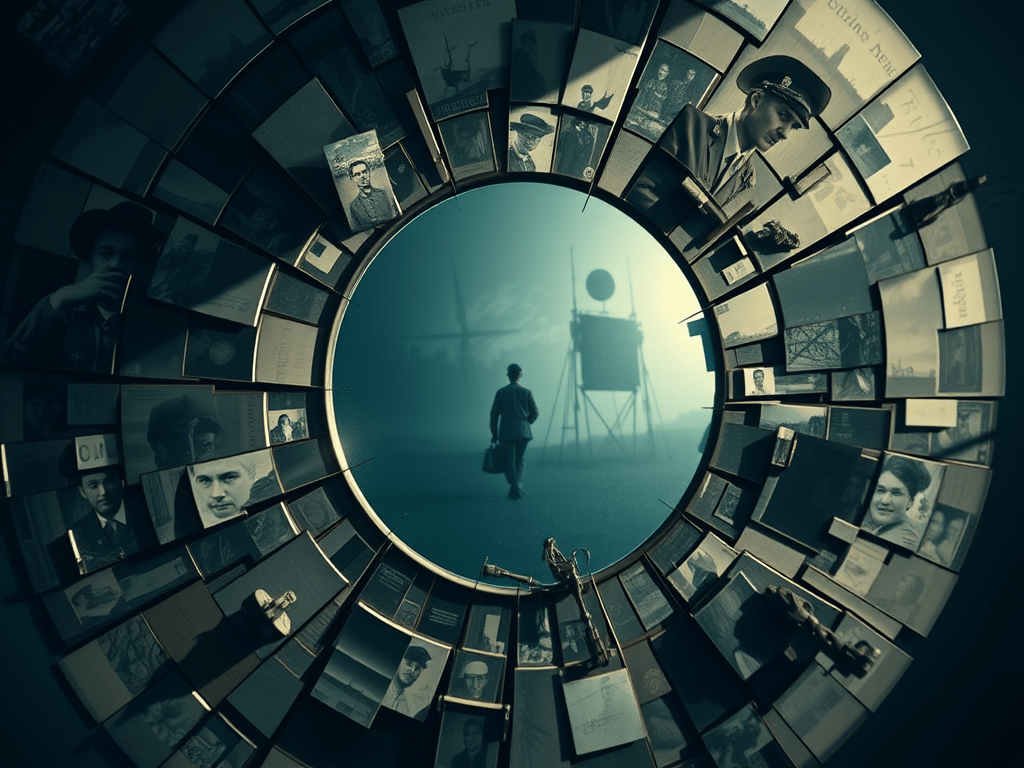
Memory, Propaganda, and the Broken Mirror Memory and Power: The Will to Frame the Past The past is not what happened, but what is remembered—and how.Even the most honest account is never neutral: every narration decides what to include, what to omit, where to begin, and where to end. History always hovers between recounting and…
Written by
-
The Great Divide – 1: The Will to Guide
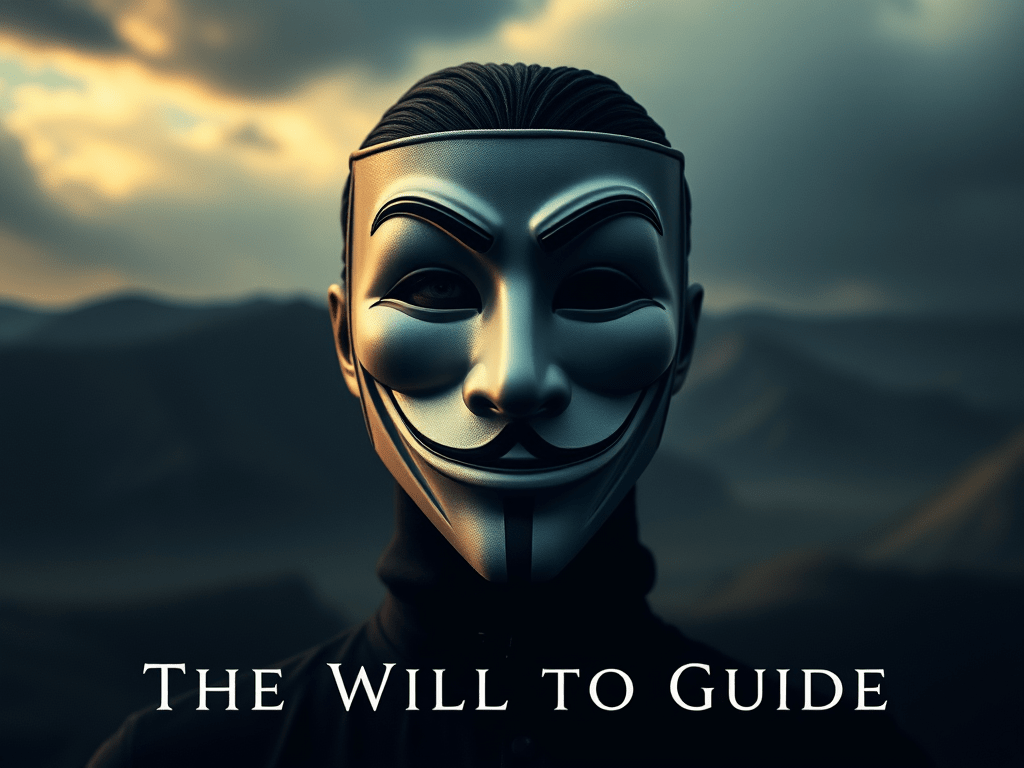
The Mask of Concern In the modern world, domination rarely shows its face directly. It often comes wrapped in the language of care—progress, development, and universal rights. Where past empires justified their rule through divine right or military might, today’s dominant powers present their actions as benevolent, necessary, or humanitarian. Yet the underlying structure remains:…
Written by
-
Beyond Faith and Reason – 5: The Resolution – The Necessary Appearing of Truth Beyond Dualism
We have followed a path that moved from the initial tension between myth and philosophy, through the religious effort to hold heart and intellect together, into the modern rupture of reason’s autonomy and its eventual fragmentation in postmodern relativism. Now, at the threshold where every resolution has failed, and all reconciliations collapse, something else begins…
Written by

-
The Inevitable Convergence: When Thought Recognizes Being
The Final Unveiling of a World That Already Is Thought Was Never Outside of Being From its beginning, human thought has tried to understand the world.It has asked, questioned, calculated, hoped, feared, and searched. Sometimes it believed in gods.Sometimes in causes.Sometimes in freedom, progress, the will. But in every case, it assumed — silently —…
Written by

-
Generational Rupture 7: The Return of the Ancients — Why the Future Cannot Cancel the Eternal
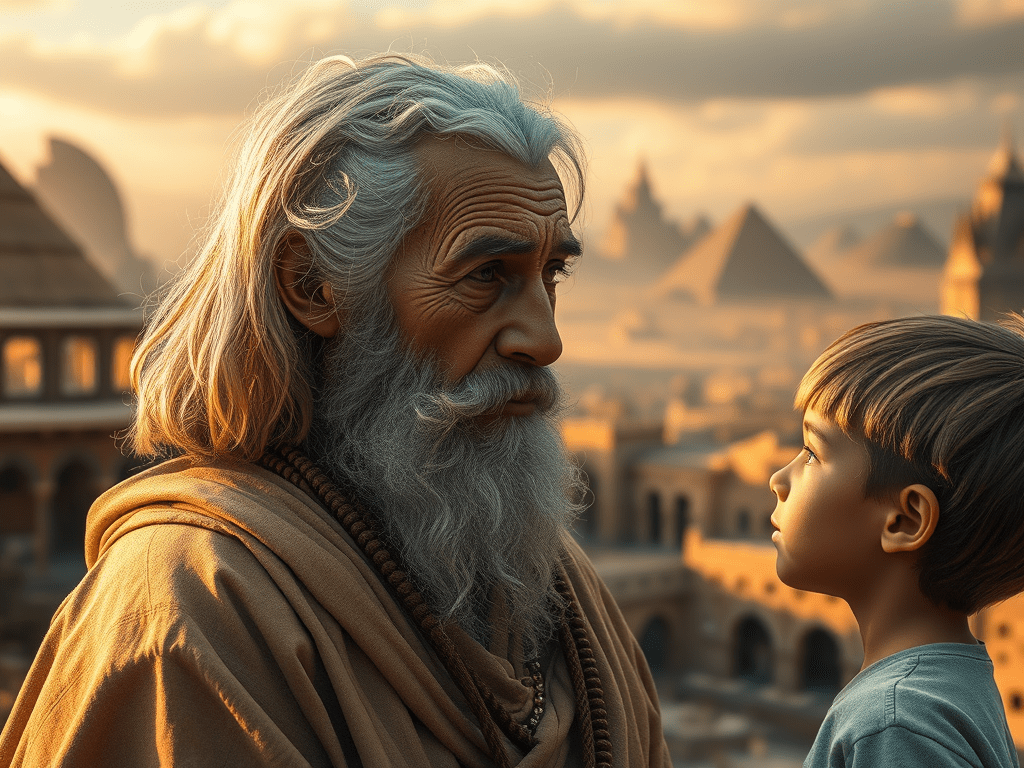
Modernity believes in irreversibility. It tells us that what is left behind stays behind, that time flows in one direction, that progress renders the past obsolete. In this faith, youth replaces age, technology replaces tradition, the image replaces the word. And yet, despite its power, this movement is haunted. For even in the midst of…
Written by
-
Psychedelics and the Structure of Being – 6: Healing or Hallucination? Psychedelics, Trauma, and the Eternal Self
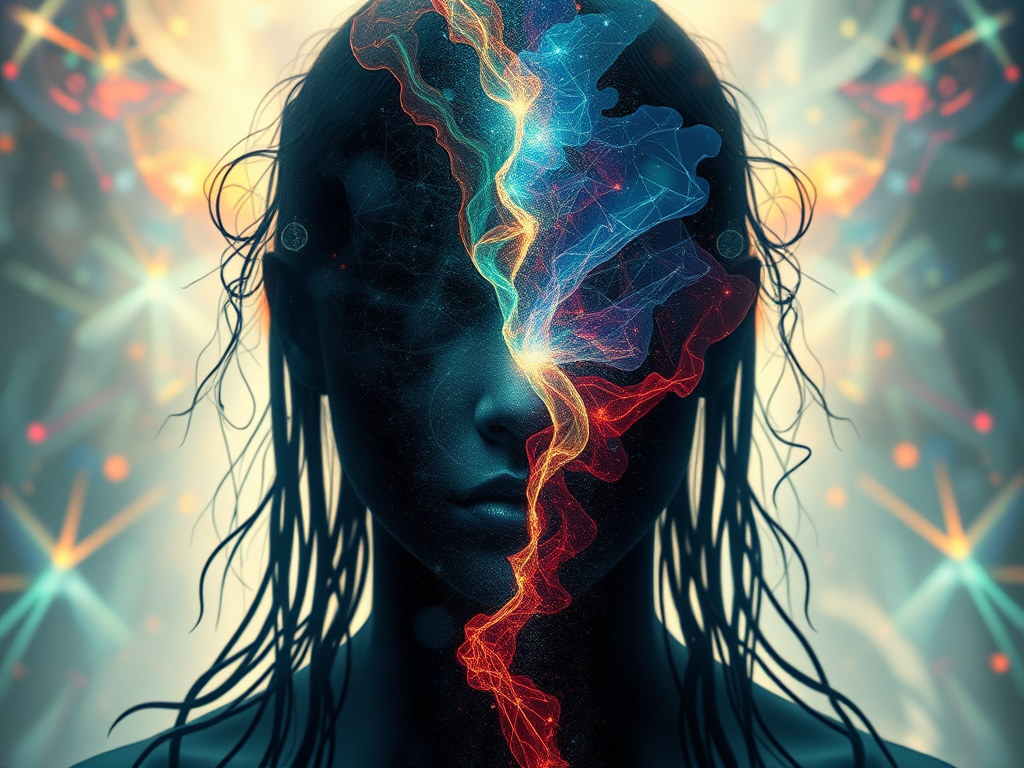
In recent years, the conversation around psychedelics has shifted from the esoteric to the therapeutic. Once the domain of mystics and seekers, substances like psilocybin, MDMA, and ayahuasca are now being explored in clinical settings to treat trauma, depression, and existential anxiety. The stories are compelling: people describe profound breakthroughs, emotional release, and a newfound…
Written by
-
Christianity Beyond Symbols – 7: The Last Revelation — The End of Symbol, the Appearing of Truth
“I saw no temple in the city, for its temple is the Lord God the Almighty and the Lamb.”— Revelation 21:22 “The city has no need of sun or moon… for the glory of God gives it light, and its lamp is the Lamb.”— Revelation 21:23 “There shall be no night there.”— Revelation 21:25 No…
Written by

-
Christianity Beyond Symbols – 5: The Christ Who Reveals — From Savior to Self-Revealing of Being
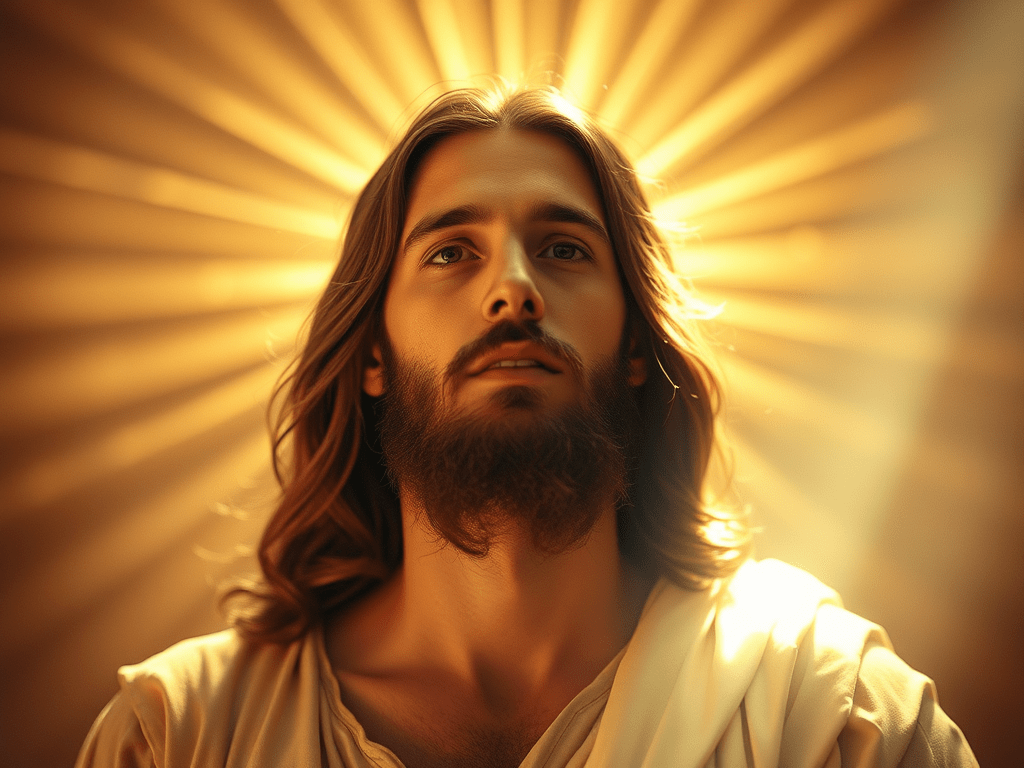
“The Word became flesh and dwelt among us, and we beheld His glory…”— John 1:14 “He is the image of the invisible God… in Him all things hold together.”— Colossians 1:15–17 “Whoever has seen me has seen the Father.”— John 14:9 From Mediator to Manifestation For many, Christ is understood as a mediator — the…
Written by
-
Living in the Light of Being — 8:The One Who Sees — Thought, Presence, and the End of Becoming
There is a kind of presence that does not call attention to itself.It does not seek to lead, inspire, or heal.It does not perform knowledge or pretend to have arrived.It simply sees. And in that seeing,a different quality of life begins to appear —not dramatic, not exceptional,but clear. This is the life of one who…
Written by

-
Living in the Light of Being — 4:The Beauty That Does Not Seek — Art and the Refusal of Ego
Some beauty demands attention.It calls, impresses, provokes, performs.It asks to be noticed — and often is. But there is another kind of beauty.It does not ask, and does not need.It does not seek to persuade or prove.It simply is — quiet, exact, uninsistent.And in that stillness, it shines. This is the beauty that appears when…
Written by

-
Living in the Light of Being — 3: Faithfulness Without Role — The New Life as Silent Witness
There comes a point in the path where the desire to serve, to teach, to be useful — even to “embody truth” — begins to dissolve. Not because love fades.But because truth no longer needs to be performed. One sees:There is nothing to add to Being.And so the deepest fidelity is not activism, expression, or…
Written by

-
In the Time of Unveiling – 4: Signs of the New — The Appearance of Being in a Dying World
The world we have known is unraveling.Its institutions falter. Its values fracture. Its promises fade.Yet even in this twilight, something else is beginning to appear. Not a new ideology.Not a better system.Not a replacement myth. But something quieter.Something radiant. A different kind of presence.A different kind of thought.A different kind of self. Not made —…
Written by

-
The Wound of Time –4: The Joy Beyond Time — Freedom from Progress and Regret
We are taught to see joy as something rare, fleeting, or earned. It comes, we are told, when things go well — when the work pays off, the path becomes clear, the healing takes hold. Joy is imagined as a moment at the far end of progress, the prize after suffering, the reward of time’s…
Written by

-
Know Thyself – 9: The Community of Eternal Selves
Beyond Contract and Contingency: Toward a People of Being Modern society is built upon the belief that individuals are autonomous agents who form relationships: personal, social, or political; through choice, negotiation, and mutual benefit. From this standpoint, community becomes a fragile contract, always subject to revision, dependent on will, agreement, and utility. But this vision…
Written by


