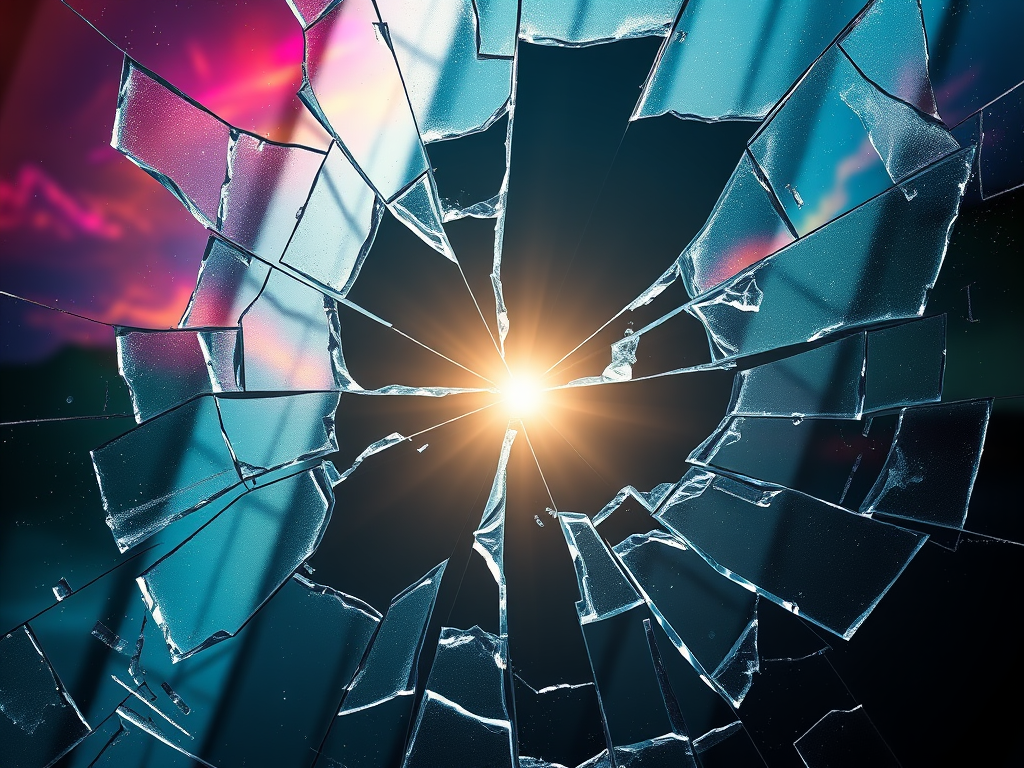
Across cultures and epochs, humanity has carried the sense of a loss, a fracture, an “original sin.” In myth, it takes the form of a paradise lost: Eden, the Golden Age, a primordial wholeness broken by disobedience, hubris, or error. In philosophy, it appears as the restless search for certainty, the attempt to overcome error through reason and to rebuild a foundation unshaken by doubt. In religion, it becomes salvation history, a drama of fall and redemption. In psychology and modern ideologies, it reappears as trauma, alienation, or the utopian yearning for a “new man” and a “new world.”
Though the languages differ, the intuition is the same: there is a wound at the heart of existence, and all systems, sacred or secular, set themselves the task of healing it.
The Persistence of the Fracture
But what is this wound? It is not simply moral disobedience or psychological trauma. It is deeper: the conviction, seemingly obvious, that what is can pass into what is not. That being can be lost, that death is ultimate, that time consumes and nullifies.
This is the primordial error, the original veiling through which history itself appears. When the human gaze fixed itself on the spectacle of birth and death, of appearing and disappearing, it concluded that reality follows this rhythm, that being arises from nothing and returns to nothing. From this conviction grew the myth of mortality. Death entered the world not as an event, but as a belief: the belief that what is can cease to be.
From this apparent fracture sprang theology’s drama of salvation, philosophy’s struggle with skepticism, psychology’s longing for wholeness, and politics’ utopian projects. Each promised a way beyond loss and fragmentation. Yet all began from the same assumption: that loss was real, that being itself was wounded. Their attempts at healing could never fully succeed, because they still presupposed the wound they sought to overcome.
The Eternal Unveiled in the Temporal
The unveiling of truth shows something different. The fracture was never real as a rupture in being. It existed only as an appearance within the way reality was interpreted. What was taken to be an original fall was in fact the belief in becoming itself.
Death, in this light, is not an event that truly consumes being. It is the veil through which eternity appears as exposed to loss. To recognize this is to see that salvation was never a task to be accomplished, but a truth to be unveiled: that nothing was ever outside eternity, nothing was ever corruptible, nothing was ever in danger of being lost.
There was no divine mistake to repair, no plan derailed, no ontological catastrophe to reverse. Every being abides, unbroken, within the fullness of what is.
History as Ordered Appearing
This recognition does not empty history of meaning. On the contrary, it clarifies why the sense of fracture has accompanied humanity in every age. Religion, philosophy, psychology, ideology were not errors to be discarded, but necessary moments in the ordered appearing of what has always been.
Each gave voice to the same demand: that death must not have the final word, that wholeness must be more fundamental than loss. Their limitation lay not in the seeking, but in the assumption that what they sought had once been lost.
History is not the record of a paradise shattered and slowly rebuilt. It is the unfolding of eternity through the appearance of loss, until that appearance is recognized as such and eternity shines through the very forms that once seemed to obscure it.
The End of the World, the New Earth
This is why so many traditions speak of an “end of the world,” a descent of the kingdom, a new heaven and a new earth. These are not forecasts of destruction, but symbolic anticipations of recognition. They do not announce the replacement of reality, but the insight that heaven and earth were never truly separated.
The kingdom is not a promise deferred to the future, but a presence that was always here. The “new” earth is not another world to come, but the eternal appearing with greater clarity within the temporal.
Beyond the Fracture
Philosophy’s future lies here: in the clarity that what is, cannot not be. That every being is eternal. That the fracture belonged to the appearing of history, not to reality itself.
To recognize this is to see that nothing was ever truly missing. Salvation is not the repair of a wound, but the unveiling of a wholeness that never ceased to be.
In this light, death is no longer an absolute tragedy, but the dissolving of the illusion of annihilation. It is the lifting of a veil, the recovery of the fullness of all that has ever appeared, gathered eternally in Being.


Leave a Reply