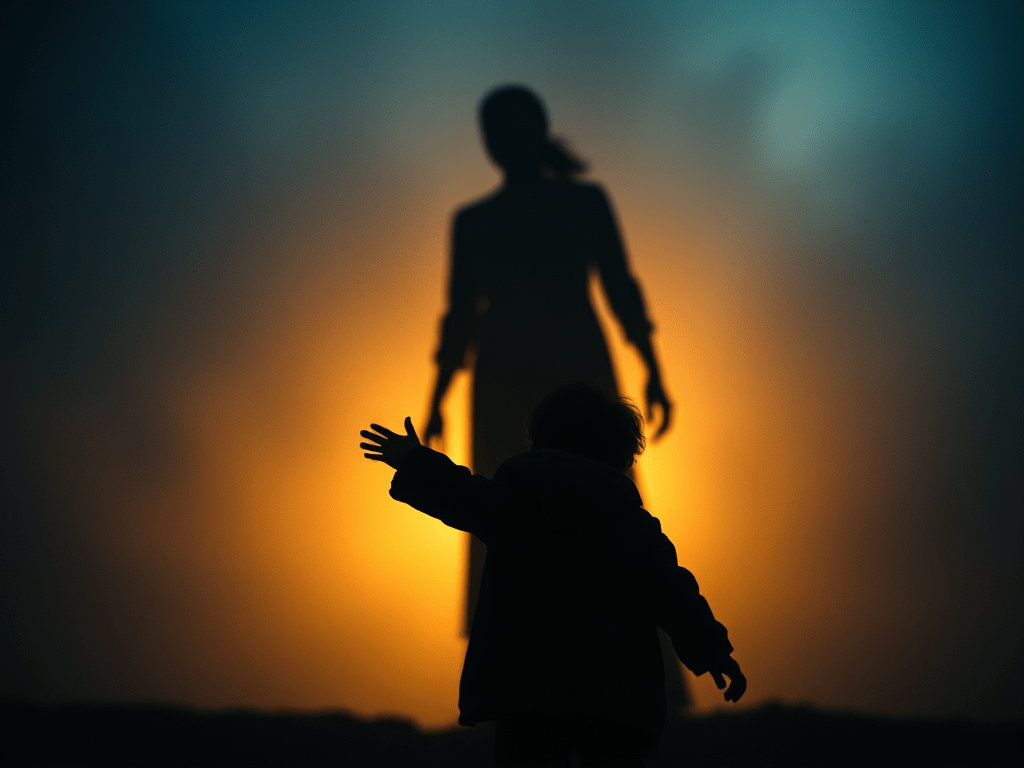
Fear is among the most intimate and universal of human experiences. It emerges before thought, before speech, in the cry of a child who senses the absence of a parent. It lingers in the grown adult who anticipates loss, pain, or death. Fear appears as trembling in the body, as anxiety in the mind, as dread in the soul. It can be fleeting or suffocating, rational or unnameable. Always it is the sense that what we hold dear might slip away—that life itself might collapse into nothing.
Fear in Religion and Myth
From the earliest myths, fear was woven into humanity’s relationship with the divine. The gods were to be appeased so that chaos would not erupt. Rituals of sacrifice sought to tame the terror of death and disaster. Religions promised salvation, often by teaching that fear itself was punishment for disobedience or the mark of an original fracture. The Book of Genesis speaks of fear entering after the Fall; the myths of many peoples echo the sense that a primordial harmony was broken, and fear was its shadow.
Yet even as they named fear, these traditions also offered hope: deliverance, redemption, a way back to wholeness. Heaven, nirvana, the new earth—all were responses to fear’s sting. Still, they often placed the cure outside the present, in a future or otherworldly fulfillment.
Fear in Philosophy
Philosophy, too, has wrestled with fear. Epicurus declared that fear of the gods and of death was the greatest obstacle to peace of mind, and he sought to dissolve it by reason: the soul dissolves at death, and nothing remains to suffer. The Stoics taught courage through acceptance of fate, urging us to distinguish what lies within our control from what does not. For Kierkegaard, fear—or rather angst—was not merely a weakness but a revelation of our freedom, a vertigo before the abyss of possibility. Heidegger saw fear and anxiety as disclosing our being-toward-death, the horizon that gives urgency to existence.
Again and again, philosophy tried either to master fear through reason or to reinterpret it as the very site where truth about human existence appears. Yet fear remained: recast, dignified, or endured, but not dissolved.
Fear in Ordinary Life
Outside temples and treatises, fear takes simpler forms. The child who dreads the dark. The parent who fears for a child’s safety. The patient who awaits a diagnosis. The worker who fears losing a job. The lover who fears abandonment. Fear threads through everyday life, sometimes as background hum, sometimes as paralyzing storm.
We may learn to cope, to manage, to soothe. We may seek comfort in therapy, distraction in entertainment, solace in relationships. Yet beneath these strategies lies the same root: the dread that what we are and love is fragile, temporary, passing away. Fear is not merely a biological reflex; it is the metaphysical wound of believing that being can be lost.
Fear and the Structure of Being
This belief—that what is can vanish into nothing—is what Emanuele Severino names the primordial error. It is the source of all nihilism, and therefore of all fear. Fear seems obvious only because we take for granted the supposed evidence of becoming: that things arise from nothing and return to nothing. But this “obviousness” is illusion.
The truth is simpler and more radical: what is, cannot not be. No being ever falls into nothingness. What appears may withdraw from sight, but it does not cease to be. Pain appears, death appears, fear itself appears—but none of these can undo the eternal reality of Being.
This recognition does not trivialize pain or command us not to fear. It allows us to see fear for what it is: the echo of an ancient misbelief, the veil that has long obscured what was never absent. To glimpse this is already to sense another relation to fear—not as master or enemy, but as witness to the truth it cannot erase.
Epilogue: The Veil and the Light
From the trembling of a child to the solemn visions of myth, from the inquiries of philosophy to the worries of daily life, fear has shaped human history as much as hope or love. It has generated gods, rituals, arguments, therapies. But its root has always been the same: the illusion that what is could ever not be.
Seen in the light of Being, the long history of fear resolves itself. The veil was never real; the fracture never severed what cannot be broken. Even in fear’s grip, eternity remains untouched. And beyond fear’s shadow shines what has always been present: the indestructible fullness of Being, eternal, unbroken, whole.


Leave a Reply