When the Elimination of Suffering Becomes a New Form of Suffering
Humanity has always dreamed of a life free from suffering. We have sought protection from disease, hunger, physical hardship, uncertainty, and death. For much of our history, these aspirations seemed beyond reach. Today, however, technology is progressively transforming what once appeared impossible into achievable goals.
Medicine extends life and relieves suffering. Machines perform tasks that once demanded years of human labour. Digital systems provide immediate access to information, communication, and services. We increasingly expect our surroundings to respond to our needs, anticipate our wishes, and remove obstacles before they become difficulties.
There is much to recognise in these achievements. Yet they also raise a question that becomes more pressing with every new possibility: what happens when the elimination of suffering becomes the principal purpose of human existence?
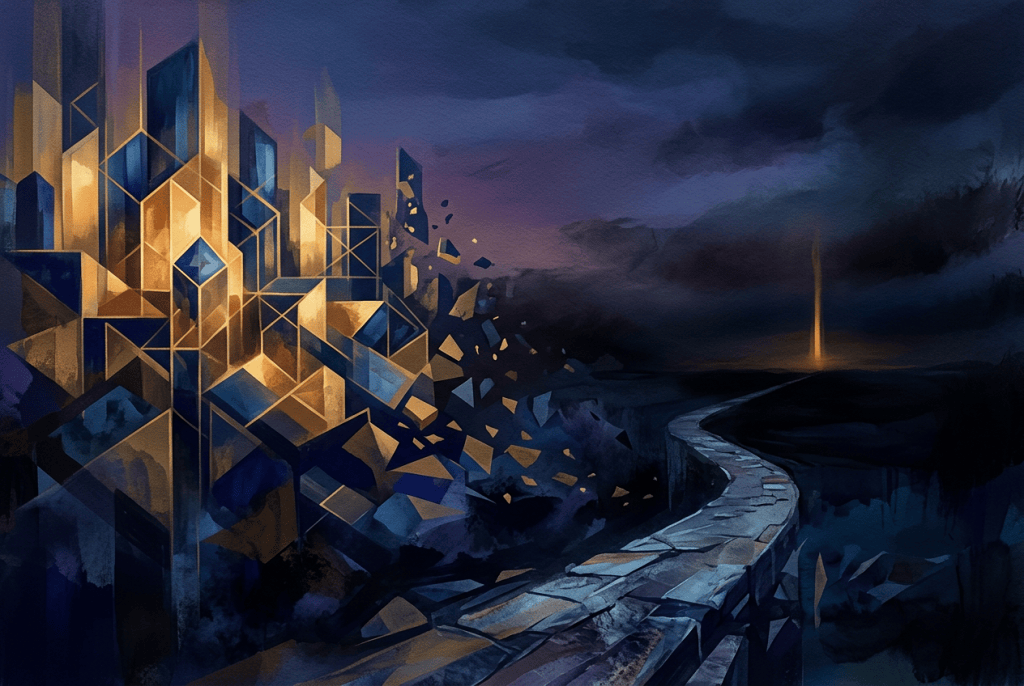
The philosopher Emanuele Severino described a future horizon that he called the paradise of technique. It is a world in which the increasing power of technology promises to satisfy human needs and overcome the limitations that have traditionally defined our existence. But this apparent paradise contains a profound contradiction. The more humanity succeeds in controlling the conditions of life, the more clearly it may discover that the fulfilment of its desires does not necessarily bring the fulfilment it seeks.
The Expansion of the Will
Technology is not simply a collection of instruments. It expresses a particular relationship with the world: the conviction that whatever appears can be transformed, corrected, improved, or replaced according to our purposes.
This conviction has produced extraordinary results. But it also encourages an expectation that every difficulty is ultimately a technical problem awaiting a solution.
When the body becomes ill, we seek ways to treat it. When work becomes exhausting, we develop automation. When communication becomes difficult, we develop faster means of communication. When emotional suffering appears, we look for ways to understand and manage it.
The same logic increasingly extends into every dimension of existence. We want not only to overcome external obstacles but also to organise our inner experience. We seek to manage our feelings, optimise our performance, regulate our relationships, and protect ourselves from whatever might disturb our sense of well-being.
Yet the difficulties of existence do not disappear simply because we have become better at addressing particular problems. New expectations arise, new forms of dissatisfaction emerge, and the threshold of what we consider tolerable changes.
The individual who has come to expect that difficulties can be resolved may find those that remain increasingly difficult to accept.
The Return of Suffering
Here we encounter a paradox of considerable importance.
The more we organise existence around the elimination of suffering, the more intolerable suffering itself may become.
When external hardship is reduced, we might expect a corresponding increase in human fulfilment. But this does not necessarily happen. The absence of certain difficulties does not automatically provide meaning, belonging, or an understanding of our relationship with others.
Indeed, the expectation that life should be free from disturbance may generate new forms of distress. Ordinary sadness becomes harder to accept. Frustration becomes an interruption of personal fulfilment. Relationships that demand patience and responsibility become increasingly difficult to sustain.
We may even begin to suffer because we are suffering, unable to reconcile our actual experience with the expectation that we should be well.
This is not an argument against technological progress, medicine, or the relief of preventable suffering. It points to a distinction between technical success and the meaning of existence.
Technique can change the conditions under which we live. It cannot, simply by doing so, establish what makes existence meaningful.
The Happiness That Cannot Be Guaranteed
Suppose that technique eventually succeeds in resolving most of the problems that have troubled humanity. Material deprivation is overcome, disease is largely controlled, physical hardship is reduced, and many of the sources of suffering that have accompanied human existence are brought under our command.
Would this make us happy?
Severino points towards a difficulty that goes deeper than the limitations of technical progress. Happiness that is awaited remains uncertain. Even when we obtain what we desire, the possibility of losing it accompanies our possession. We may enjoy it today, but we cannot be certain that it will remain tomorrow. And the more important that happiness becomes, the more threatening its possible loss may appear.
Thus, the paradise we have worked so hard to attain may bring with it a new and perhaps more pressing anxiety: the need to preserve what we have achieved.
The problem is not simply that technique has failed to eliminate enough suffering. It is that no accumulation of achievements can provide the certainty that the will demands. Every fulfilment remains exposed to the possibility of loss and disappointment.
And so the question returns, more urgently than before: when will we finally be able to rest in a happiness that cannot be taken away?
Perhaps the greatest disappointment of the technological paradise would not be that it fails to satisfy our desires, but that even their satisfaction cannot provide the certainty we were seeking.
The Shadow of Death
There is, however, a more fundamental uncertainty that no technical achievement can remove: death.
Technique may postpone it. It may extend life, treat diseases, and overcome many of the conditions that have traditionally brought human existence to an end. But within the prevailing understanding of existence, death remains the ultimate possibility. Everything we achieve, everything we love, and everything that gives our lives meaning is still believed to be destined to disappear.
Perhaps this is why the promise of technological happiness can never fully deliver what it seems to offer. We may become healthier, wealthier, and more secure, but the possibility of losing everything remains. The more we invest in the preservation of life, the more threatening its eventual end may become.
Technique can also postpone our confrontation with this question. So many immediate problems demand our attention, and so many new possibilities invite our pursuit, that death can recede into the background of everyday life. But it has not been answered. Eventually, the question returns, more pressing precisely because so much has been achieved.
What meaning can happiness have if everything that makes it possible is ultimately destined to disappear? What can the fulfilment of our desires offer if the very beings we love are believed to be destined to become nothing?
The technological paradise cannot answer these questions because they do not concern the conditions of life. They concern the meaning of existence itself.
What Cannot Be Controlled
Perhaps the deepest limitation of the technological project becomes visible when we consider the nature of existence itself.
We can transform our surroundings, but we cannot make ourselves independent of the world. We can alter the conditions of our relationships, but we cannot make our existence self-sufficient. We can postpone certain losses, but we cannot establish the meaning of what we love through the power to preserve it.
The attempt to control everything eventually encounters something that cannot be treated as an object of control: existence itself.
And here we reach the underlying contradiction. The technological project assumes that beings can emerge, change, and eventually disappear, and that human power can intervene in this process. It seeks to make life more secure within a conception of existence that leaves everything fundamentally insecure.
From Severino’s perspective, however, the problem lies deeper still. The belief that beings can become nothing is itself mistaken. No technical achievement can overcome the fear of annihilation as long as annihilation is accepted as the ultimate truth about existence.
Beyond the Promise of Paradise
Perhaps we need to reconsider what we mean by overcoming suffering.
This does not require us to reject the achievements of medicine, abandon technology, or renounce the possibilities of human knowledge. It requires something more fundamental: recognising that the meaning of existence cannot be measured by the extent to which we can control its conditions.
A life is not fulfilled simply because it contains fewer difficulties. Nor does the disappearance of discomfort necessarily bring us closer to understanding what we are, what others mean to us, or what makes our existence significant.
We have become extraordinarily capable of changing the conditions in which we live. But this power does not automatically bring a deeper understanding of the reality in which we find ourselves.
Perhaps the paradise we seek through technique is not what we have imagined. Not because the relief of suffering is undesirable, but because we have mistaken the removal of difficulties for the fulfilment of existence.
We may eventually discover that what we needed to overcome was not the difficulty of being alive, but the belief that life must first become free of difficulty before it can be meaningful.


Leave a Reply