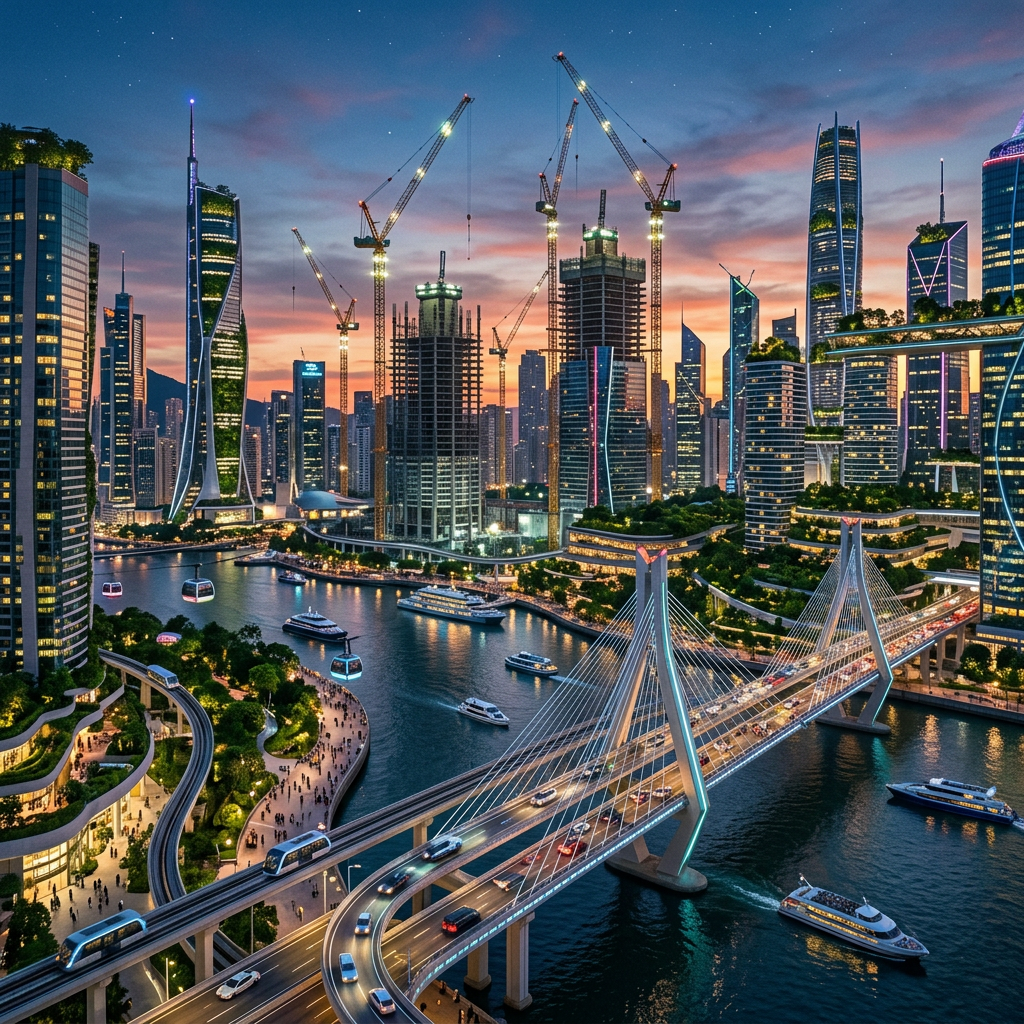
The Measure of Our Power
Shaping the World
Human life is inseparable from action.
From the moment we are born, we find ourselves in a world that calls for a response. We learn, build, cultivate, protect, heal, repair, invent, and organize. We do not simply inhabit the world. We continually seek to shape it.
This is true in the smallest details of daily life as much as in the great events of history. A farmer prepares the soil in the hope of a harvest. He clears the field, sows the seed, irrigates the land, and patiently waits for it to grow. Yet as the crop begins to flourish, another concern naturally appears. It must now be protected. Fences are built, tools are improved, boundaries are marked, and sometimes disputes arise over land or water.
None of this necessarily begins with hostility, but with care. The same movement that cultivates also protects, and every act of protection quietly introduces a distinction between what is entrusted to us and what lies beyond it.
The same pattern can be recognized almost everywhere.
A family builds a home. Soon it locks its doors, establishes rules, teaches its children how to remain safe, and seeks to preserve what has been entrusted to its care. A city prospers through trade. Roads are built, laws established, institutions strengthened. Yet prosperity also requires defence. Walls are raised, alliances formed, and those same peaceful achievements become something worth protecting.
As our care extends, so too does the world that calls for protection, stewardship, and defence. Human life continually unfolds in this way.
The Expansion of Action
As our knowledge grows, so do the means available to us.
Medicine extends life, relieves suffering, and cures diseases that once seemed untreatable. The same scientific understanding may also be used to develop biological weapons or technologies capable of unprecedented destruction.
Communication brings distant peoples into closer contact while also allowing conflict to spread with a speed unknown to previous generations.
Artificial intelligence promises extraordinary new possibilities for learning, discovery, and creativity, while at the same time raising questions about surveillance, manipulation, and the concentration of power.
None of these developments is simply peaceful or warlike.
Each enlarges the horizon of what human beings are able to do.
We call this progress, and in many respects it truly is. Countless forms of suffering have been alleviated through discoveries that previous generations could scarcely have imagined.
Yet whether our efforts are directed toward health or defence, prosperity or security, diplomacy or warfare, they all share a common confidence.
They assume that, through knowledge and action, reality can increasingly be shaped in accordance with our aims.
This is why what we ordinarily call peace and what we ordinarily call war have always developed side by side. Every advance that strengthens one also has the potential to strengthen the other. The means that heal can also wound. The knowledge that unites can also divide. The techniques that preserve life can also make destruction more effective.
This is not a contradiction, but the horizon within which human history unfolds.
Looking Beyond Power
Recognizing this need not make us suspicious of human achievement.
Without our capacity to act, there would be no medicine, no agriculture, no art, no justice, no care for the vulnerable, and no possibility of rebuilding after disaster. Human history would be unimaginable without the countless ways in which men and women respond to what each moment asks of them.
Nor should we imagine that there is another way of living beyond action itself. Every generation necessarily inherits the world it finds and responds according to the possibilities that appear before it.
The deeper question lies elsewhere.
As our power grows, so too does our ability to organize, preserve, defend, transform, and reshape the world around us. History is often measured by this expanding capacity, and rightly so. Yet every new possibility also enlarges the horizon of what can be secured, contested, improved, or controlled.
The deepest question is no longer how much power humanity may one day possess, but whether reality itself is exhausted by what power can accomplish.
 It Is What It Is
Leave a comment