What Do We Mean by War and Peace?
Words We Rarely Question
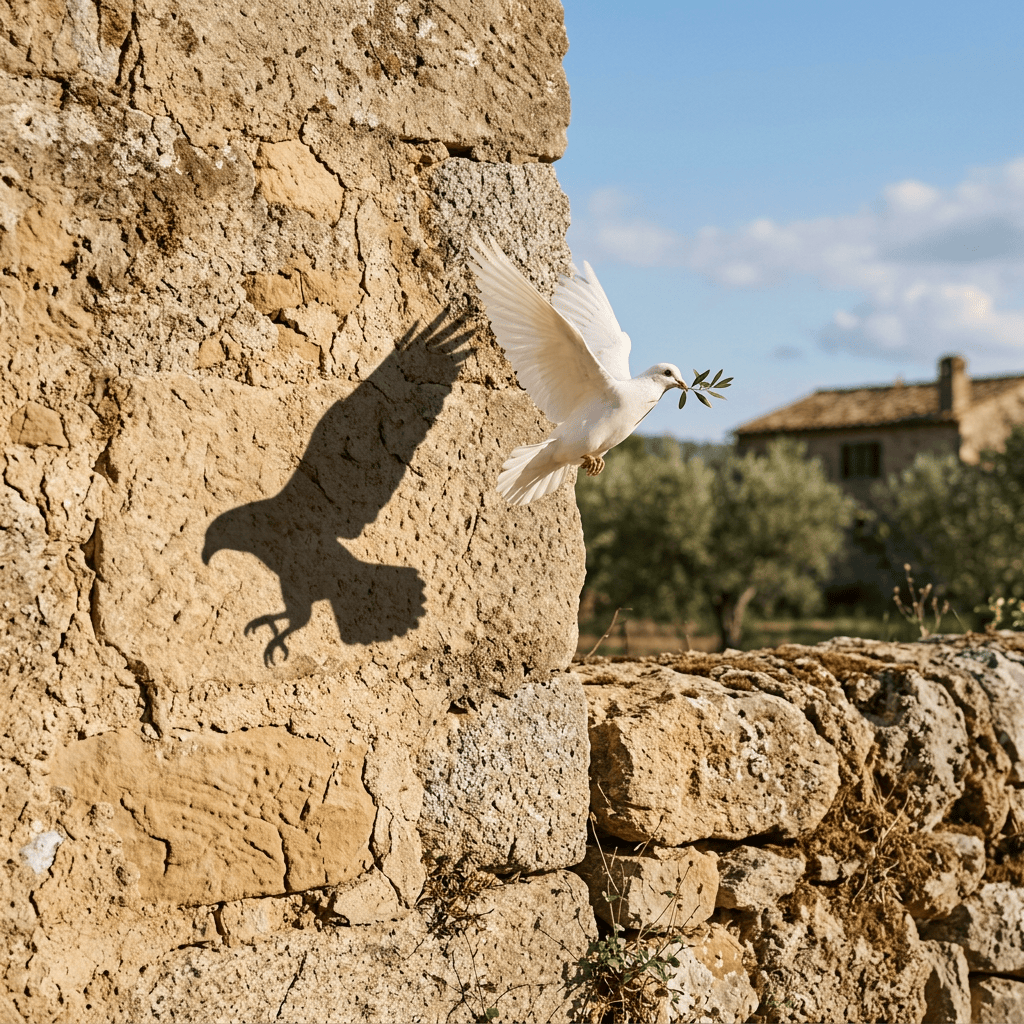
Few words seem more familiar than war and peace. From childhood onward, we learn to think of them as opposites: war is violence and peace its absence. One begins where the other ends, and history itself often appears to move back and forth between the two.
Because this way of speaking is so familiar, we rarely stop to ask what these words actually mean. They seem almost self-evident. Yet are they?
Looking More Closely
History offers many examples that make this familiar distinction less obvious than it first appears.
The Pax Romana is often remembered as one of history’s longest periods of peace. Yet that peace existed within the Roman Empire while military campaigns, conquest, and the control of distant peoples continued beyond its borders. The absence of conflict at the centre did not necessarily mean that violence had disappeared. In many ways, it had simply become less visible.
Something similar can be observed in our own time. A nation may enjoy decades of stability while its prosperity depends upon resources, trade, or geopolitical tensions extending far beyond its own borders. What appears peaceful from one perspective may look very different from another. The absence of open conflict is not always the presence of peace.
History also preserves countless moments that seem to point in the opposite direction. Even in the midst of war, realities continue to appear that cannot be reduced to violence. Soldiers have risked their lives to rescue wounded enemies. Civilians have hidden complete strangers at the risk of their own lives. Parents have continued to protect their children under circumstances in which every reason for hope seemed to have disappeared. Sometimes, even between enemies, gestures of unexpected humanity emerge.
None of these moments makes war less tragic. Nor do they lessen the suffering it brings. They simply suggest that what appears in war is never exhausted by war itself.
The same pattern can also be recognized much closer to home. A family may appear peaceful because arguments have ceased, while resentment quietly continues beneath the surface. Conversely, moments of deep disagreement can also reveal honesty, forgiveness, renewed trust, and a love that had previously remained unspoken.
Perhaps the words war and peace have always pointed beyond the circumstances in which we ordinarily use them.
Perhaps We Have Been Looking in the Wrong Place
If what we ordinarily call peace can conceal conflict, and what we ordinarily call war cannot extinguish courage, compassion, fidelity, or love, then perhaps these words are pointing toward realities deeper than we have assumed.
This does not mean that the distinction between war and peace disappears. The difference between a battlefield and a quiet home is real. The difference between violence and reconciliation matters profoundly.
Yet perhaps these differences do not reach the deepest meaning of either word.
Perhaps what history calls peace is not yet the whole of what peace is.
A Different Inquiry
The reflections that follow do not seek to explain war, nor to propose a path by which history might finally secure peace. They begin from a simpler question: when we speak of war and peace, what is it that we are actually seeing?
For it may be that only by looking again, patiently and without haste, these familiar words begin to reveal a depth that has quietly accompanied human experience from the beginning, though it has rarely come fully into view.
 It Is What It Is
Leave a comment