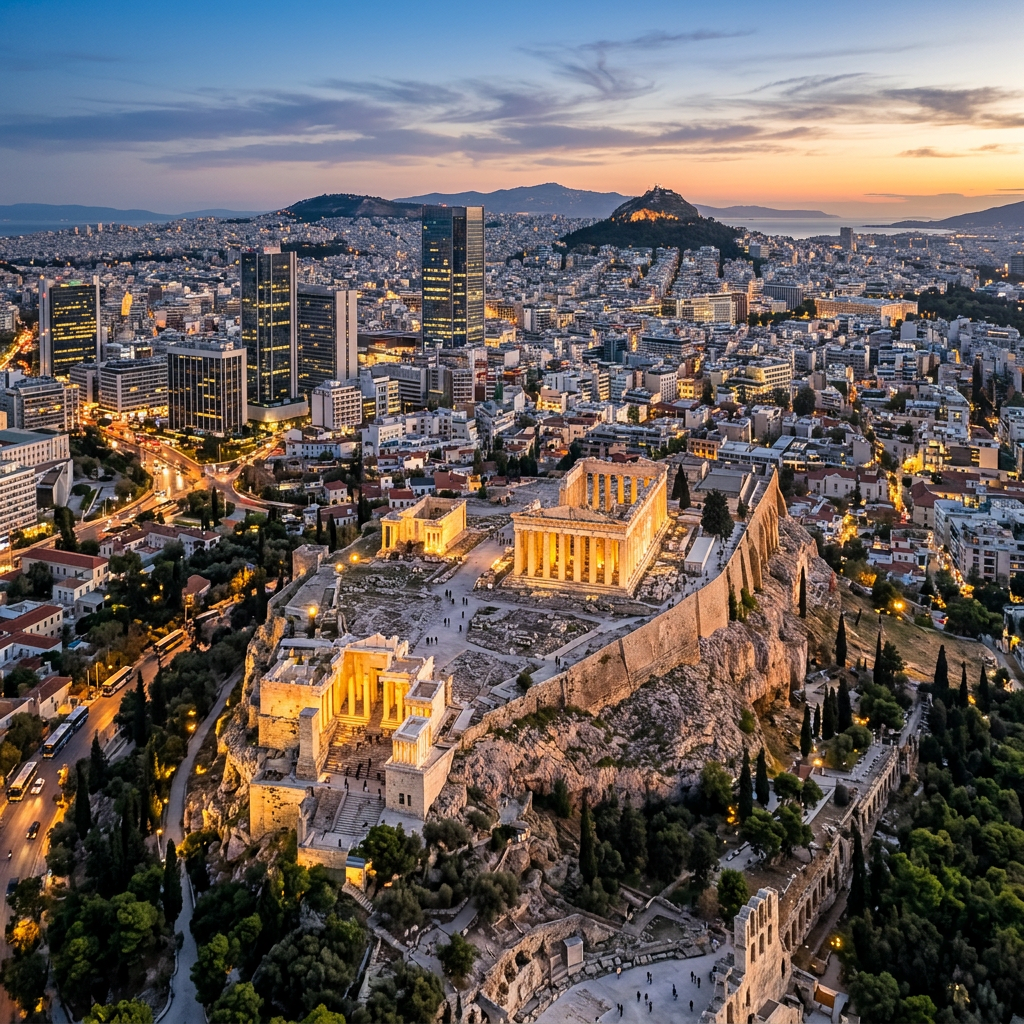
History in Another Light
The History We Usually Tell
History is often told as the story of what human beings accomplish.
History presents us with empires, nations, wars, discoveries, and civilizations, each appearing within the changing landscape of human life. Every generation receives the achievements and failures of those who came before it, while hoping to leave a better world to those who will follow.
There is much truth in this way of telling the human story.
Our decisions matter. Our actions belong to the lives of others as they belong to our own. Through them courage, generosity, injustice, reconciliation, and sacrifice become historically visible.
Yet this is not the whole story.
Throughout this series we have slowly noticed something that accompanies every historical event. Every act of building presupposes something worth building for. Every effort to protect presupposes something worthy of protection. Even our deepest longing for peace presupposes that peace is already meaningful before we attempt to establish it.
What appears through history quietly exceeds history itself.
What History Reveals
When we stand before the ruins of an ancient city, we do not see only stones.
We recognise the lives that were lived there. We imagine families, hopes, fears, celebrations, and grief. Almost everything visible has changed, yet those who lived there continue to be recognised through what remains.
The same happens when we read letters written long ago. The language may belong to another age, yet love, gratitude, regret, and hope remain immediately familiar. The historical circumstances no longer stand before us, yet what appeared through them still reaches us.
History is filled with such moments: a mother embracing her child during war, a stranger risking everything for another, a scientist patiently searching for the truth, a craftsman taking quiet pride in work well done.
These moments belong to different cultures, different centuries, and different circumstances. Yet they are immediately recognised, whatever the century in which they appear.
History does not merely record events. It also discloses realities that are never exhausted by the events through which they appear.
The Changing and the Unchanging
We usually think of history as continual change.
In one sense, this is undeniable. Every historical situation differs from another. Kingdoms disappear from the historical scene, languages evolve, technologies transform daily life, and each generation encounters circumstances different from those of the last.
Yet our ability to recognise one another across these differences suggests something equally remarkable.
Compassion is recognised across cultures, and justice across centuries.
The love of a parent for a child requires no translation. The courage of someone who gives himself for another speaks with the same clarity whether it appears today or two thousand years ago.
History presents continual change. Yet what appears through history cannot be reduced to change alone.
This is why the deepest human realities never seem to grow old. They continue to appear under endlessly different historical circumstances, yet they remain recognisably themselves.
Looking Again
We often imagine that history is the place where reality is gradually established. Yet the opposite may be closer to the truth: history is one of the ways in which what is already real becomes visible.
This does not diminish the importance of history, nor does it ask us to withdraw from its responsibilities. Our actions remain necessary, our choices remain meaningful, and the suffering of every generation remains deserving of our care.
But perhaps history is not the horizon within which reality must finally justify itself.
Perhaps history itself belongs within a deeper horizon, one that neither begins with the first civilisation nor ends with the last.
If so, then history is no longer simply the place where peace is sought.
It becomes one of the places where peace quietly appears.
And perhaps history has never been the final horizon of conflict either. For if peace can appear within history without depending upon it, then the deepest struggle may not ultimately be between nations, civilizations, or ideologies, but within the way reality itself is understood.
 It Is What It Is
Leave a comment